
Last updated November 15, 2026
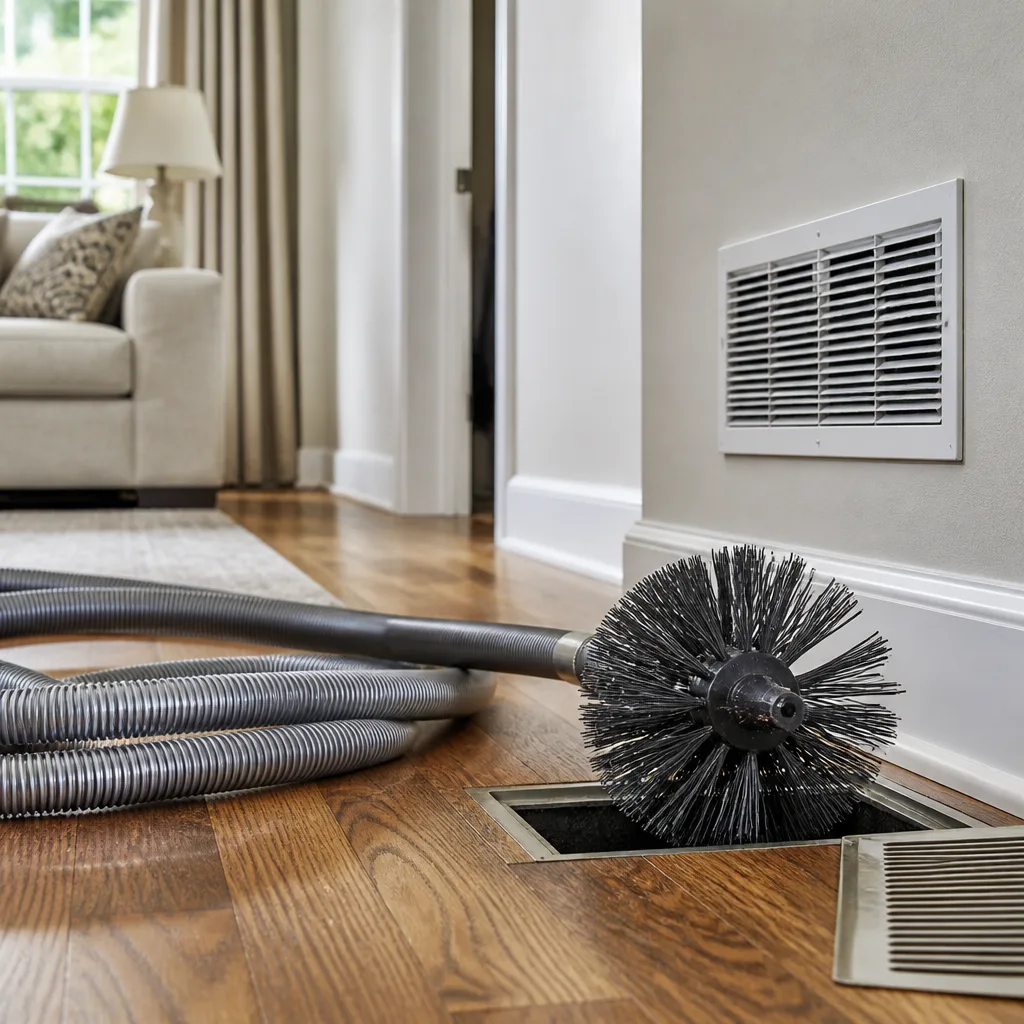 Whole-home duct cleaning
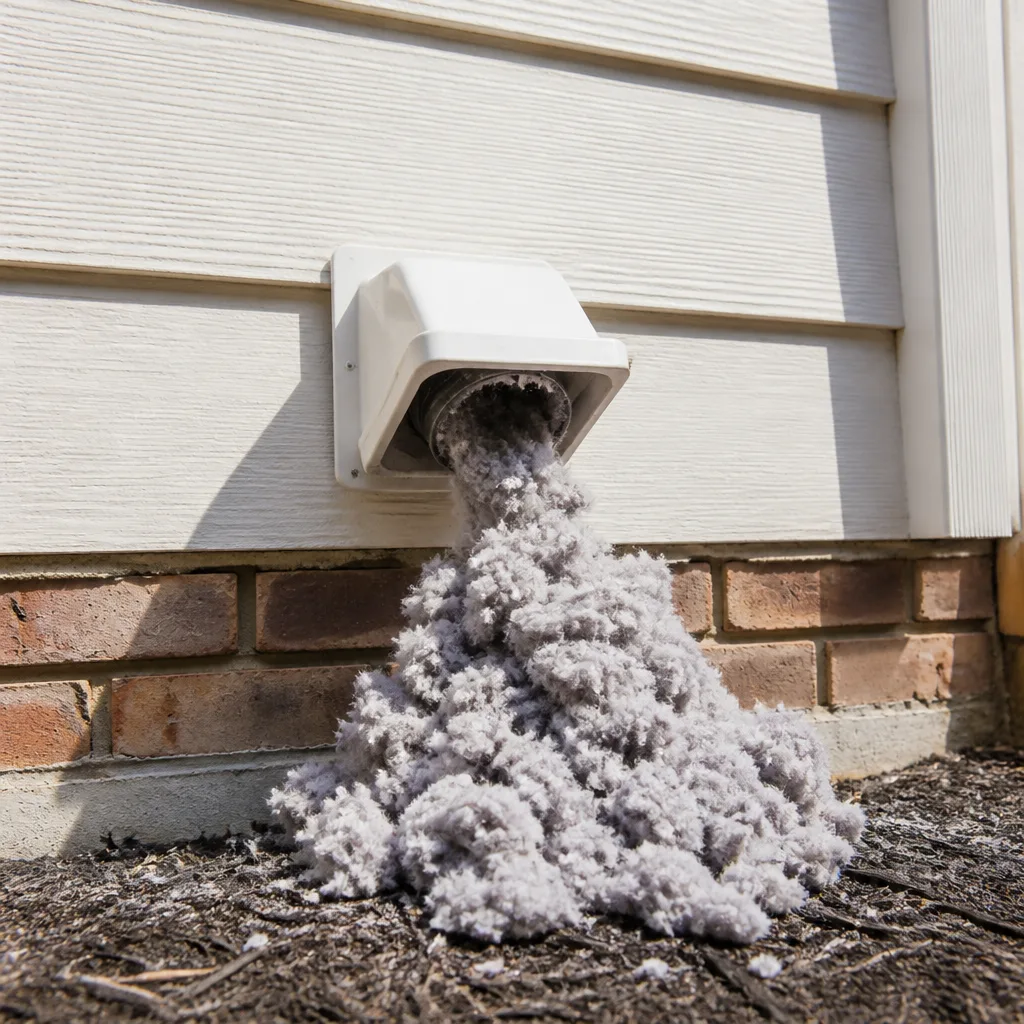 Dryer vent cleaning
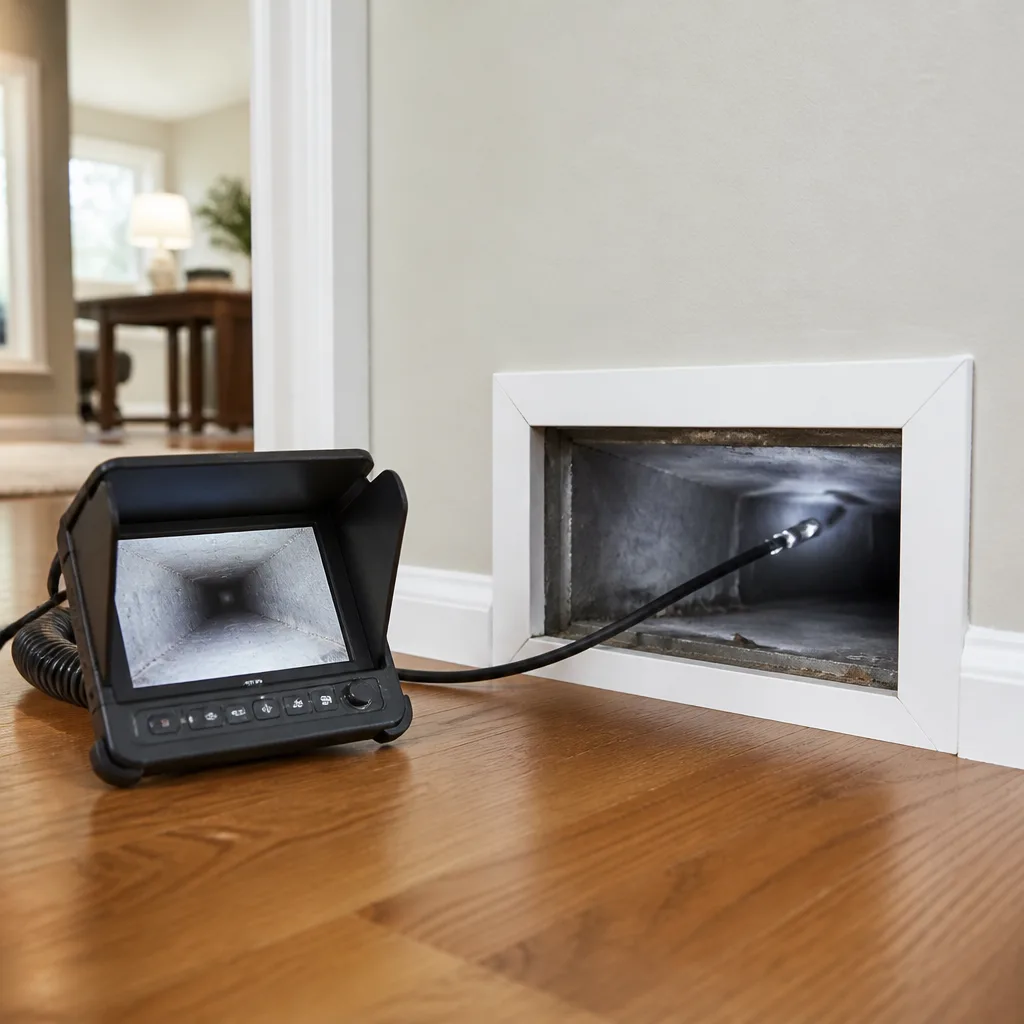 Camera inspection
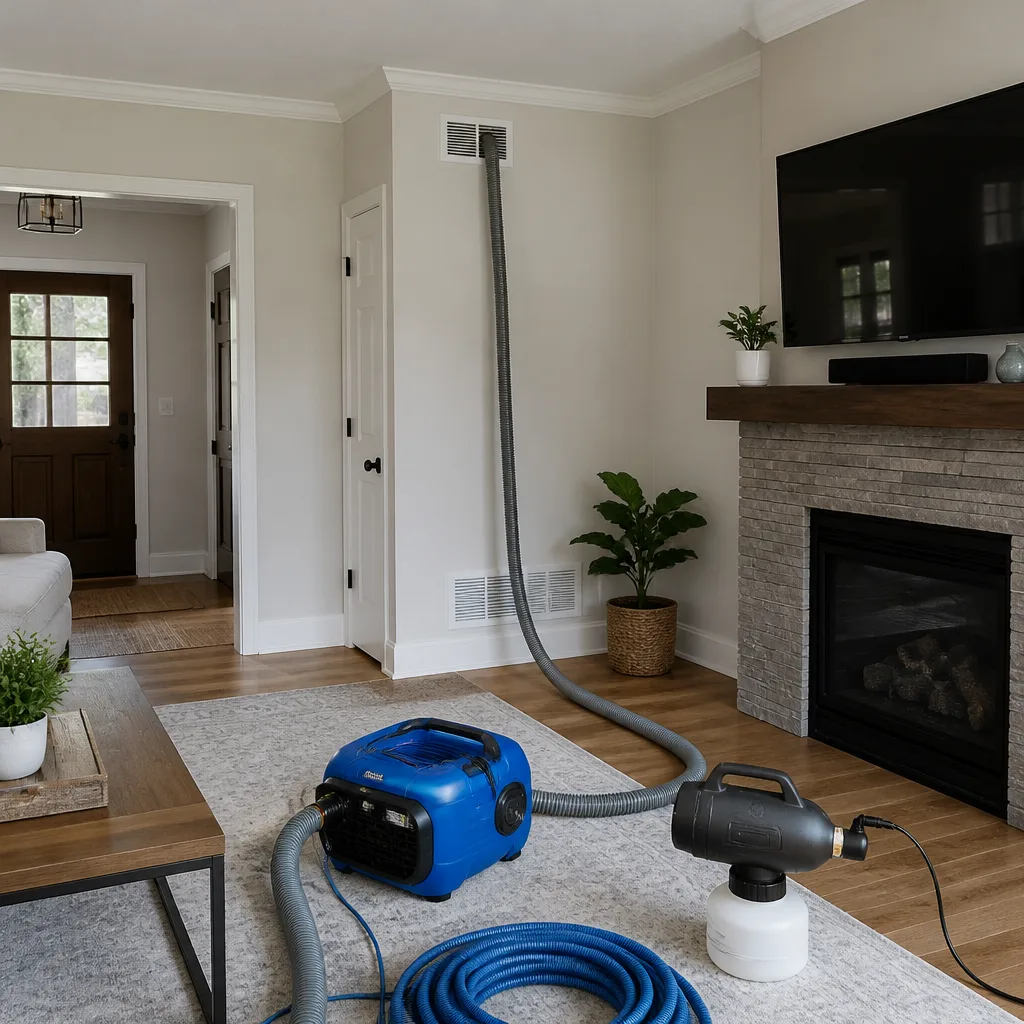 Sanitizing & deodorizing
Whole-system duct and dryer vent check with before-and-after photos - you see exactly what came out of your vents
That "$99 whole-house special" is a bait ad - the real number appears once they are in your hallway, or the "clean" is a shop-vac at the register. We photograph the inside of your ducts before and after instead.
Air Duct Cleaning Troubleshooting in Nampa: Common Problems and How to Fix Them
If one room in your house is always 5 degrees off from the rest, the thermostat isn’t lying. Your duct system is telling you something specific, and it’s usually not what an HVAC salesperson suggests. Weak airflow, standing dust, uneven temperatures and odd smells get blamed on the furnace or the air conditioner more often than not. In our experience, a good share of those complaints trace back to the ducts themselves: a crushed run behind drywall, a disconnected joint in the attic, a register boot that never got sealed. This guide walks you through symptom-to-source diagnosis for the duct problems we run into around Nampa, so you can tell a dirty duct from a broken one and know when a cleaning is the answer and when a repair is.
Quick Answer
Most air duct problems in Nampa come down to three causes: accumulated debris (dust, pollen, construction grit), physical duct damage (collapsed, disconnected or leaking runs), or pressure imbalance from leaks. You can usually tell which one you’re dealing with by testing airflow at each register, watching for debris patterns, and noting where smells or drafts show up. Cleaning fixes the first cause; duct repair fixes the other two, and no amount of vacuuming will solve a duct that’s no longer connected.
Styles & brands we work with
- Whole-home duct cleaning
- Dryer vent cleaning
- Camera inspection
- Sanitizing & deodorizing
Table of Contents
- The Symptom-to-Source Map: Start Here
- Dirty Ducts vs. Damaged Ducts: How to Tell the Difference
- What Musty, Burning and Dusty Smells Actually Mean
- Pressure Problems: Why Doors Move and Rooms Breathe Wrong
- Was Your Last Cleaning Surface-Only?
- Nampa Conditions That Speed Up Duct Fouling
- When Cleaning Isn’t Enough: Duct Repair Explained
- The Dryer Vent Is Part of the Same System
The Symptom-to-Source Map: Start Here
Before you call anyone, run through a simple symptom map. Most complaints fall into one of five categories, and each one points to a different cause. Here’s how we think about it when a homeowner describes a problem over the phone.
- Weak airflow at every register, everywhere: usually a dirty blower, clogged filter, or obstruction in the main trunk. Rarely a single dirty branch.
- Weak airflow at one or two registers only: almost always a duct-side problem in that specific run. A crushed flex duct, a closed damper, a disconnected joint.
- Visible dust blowing out of registers when the system starts: debris sitting in the run, often a sign the last cleaning skipped the branch ducts.
- Sooty or gray streaks around registers: air leaking past a poorly sealed boot, pulling attic or wall cavity air into the room.
- Uneven temperatures room to room: pressure imbalance from leakage, not usually equipment sizing.
Run a simple feel test first. Hold your hand at each supply register for a few seconds with the system running. Note the strength of the airflow. Then walk the same rooms and note the temperature after 20 minutes of runtime. The room that feels weak at the register is the room with the duct problem. The room that feels strong but still cold is usually a pressure or return-side issue.
If you want a professional baseline before troubleshooting yourself, our air duct cleaning service starts with an inspection, not a sales pitch. We look at what’s actually in the ducts before we recommend anything.
Dirty Ducts vs. Damaged Ducts: How to Tell the Difference
This is the single most useful distinction in duct diagnostics. A dirty duct restricts airflow gradually and evenly. A damaged duct restricts airflow sharply in one place and causes leakage elsewhere. They feel different at the register.
Signs of a dirty duct
- Every register shows some level of dust, not one dramatic outlier.
- Airflow feels consistent but soft everywhere.
- Dust puffs out when the blower kicks on, especially after a filter change.
- Visible dust on the register face and the wall around it.
- No whistling, no drafts, no temperature swings room to room.
Signs of a damaged duct
- One register is dramatically weaker than every other one.
- Whistling or hissing at a register, wall or ceiling.
- Drafts near closed registers or along an interior wall.
- Doors that swing or latch with unusual force when the HVAC runs.
- Dust accumulating in one specific corner of one room, not everywhere.
For visual access-point inspection, look at what you can reach. Pull a register grille and shine a flashlight down the run. You’ll usually see the first 12 to 18 inches of duct interior. If the flex duct is kinked, crushed, or pulled off the collar, that’s a repair, not a cleaning. If the interior is intact but coated in dust, that’s a cleaning job.
Do not reach into or cut into ductwork that could carry live electrical or gas hazards near the furnace. That’s the point where a trained technician should look, not a homeowner. The furnace cabinet area in particular needs a professional, and so does anything that requires opening the plenum.
What Musty, Burning and Dusty Smells Actually Mean
Odors from registers are diagnostic gold. They tell you where the air has been and what’s growing or burning in the system. Here’s how we break down the three most common smell profiles.
Musty or damp smell
Musty air usually means moisture is present somewhere in the system. In a Nampa home, the culprit is often a wet evaporator coil pan, condensation on poorly insulated duct runs in a hot attic, or ductwork that’s been pulled across cool crawlspace air. Mild mustiness after a long cooling season is common and usually points to dirty ducts plus a damp coil pan. Persistent, heavy mustiness points to a leak, a clogged condensate drain, or standing water somewhere in the system. That’s a call-a-professional-situation for airflow, but it’s also worth having your HVAC technician look at the coil.
Burning or hot-metal smell
A burning smell is not a duct cleaning problem. It’s a heating-side or electrical problem. Turn the system off at the thermostat and call an HVAC technician before running it again. A burning smell on first startup each fall can be dust burning off the heat exchanger, which is normal, but a burning smell that persists or returns mid-season is not. That’s a hard line, and we’d rather tell you to call someone else than risk a fire.
Dusty or “dirty sock” smell
A dirty, dusty smell that’s strongest right after the blower starts is a clean-the-ducts indicator. Debris sitting in the ducts gets disturbed when the system ramps up. This is the classic pattern we see in homes that have never had a professional cleaning, or where the last job touched only the trunk and skipped the branches.
Which smell means what, in short:
- Dusty: clean the ducts.
- Musty: investigate moisture, then clean.
- Burning: turn off and call an HVAC technician.
- Chemical or plastic: also stop and call an HVAC technician. Something is off.
Pressure Problems: Why Doors Move and Rooms Breathe Wrong
Doors that swing on their own or latch with odd force when the HVAC runs aren’t haunted. They’re reacting to pressure differences the HVAC system is creating. In a balanced system, the return pulls back the air the supply pushed out. In a leaking system, that balance breaks, and the house becomes a pressure experiment.
Two things cause door-movement in Nampa homes:
- Return-side leaks. The return duct pulls air from a crawlspace or attic instead of from the room, which pressurizes the rooms with supply air and depressurizes the source space. Doors between them move.
- Supply leaks in the attic. The supply pushes conditioned air into the attic instead of into the room. The rooms lose pressure, and the door into the problem room pulls closed when the system runs.
Both are duct-side problems, not equipment-sizing problems. An oversized HVAC system in a leaky duct network doesn’t fix the leak. It just leaks more air at higher pressure.
Drafts near closed registers are a related signal. When a register is closed, the air it was supposed to deliver has to go somewhere. In a well-sealed system, that air goes into the room behind the register and slows down. In a leaky system, the excess pressure pushes air out through wall cavities and around baseboards. The draft you feel is air escaping through the building envelope, not through the register.
If this is happening in your home, it’s worth a professional look. Our Nampa team treats pressure imbalance as a diagnosis, not a guess, and we won’t recommend cleaning if cleaning isn’t going to fix it. Sometimes a repair running $250 to $700 for a disconnected run fixes more than a full cleaning would.
Was Your Last Cleaning Surface-Only?
Not every duct cleaning is a real duct cleaning. A surface-only job touches the main trunk and the visible first foot of each branch. A thorough job scours the entire run, brushes the duct walls, and captures what comes loose. You can often tell the difference by airflow and by debris patterns.
Test 1: Before-and-after airflow at the registers
Before your cleaning, note how airflow feels at the furthest register in the house. That’s usually the weakest one. After the cleaning, check it again. A real cleaning should noticeably improve airflow at the weakest register within a day or two. If nothing changed, the branches probably weren’t cleaned.
Test 2: Register debris patterns
Pull a register face a week after the cleaning. A thorough job leaves the boot and the first stretch of the run visibly clean. A surface-only job leaves a fresh layer of dust against the inside of the boot because the vacuum pulled pressure but the brush never reached the walls.
Test 3: Ask what equipment was used
Air-only “vacuuming” cannot match rotary-brush contact cleaning, because the dust that matters is stuck to the duct walls. Consumer shop-vacs and small portable vacuums don’t create enough negative pressure to hold material inside the duct while it’s being dislodged. Proper equipment matters here.
- Rotary brush systems (we use Rotobrush) physically scrub the duct wall while the vacuum captures debris.
- HEPA-rated industrial machines (we use Nikro and Abatement Technologies equipment) hold the debris stream inside a regulated containment.
- Before-and-after photos are standard on a credible job. Ask to see them of your ducts, not a stock image.
If you’re checking up on a previous cleaning in Nampa, ask for the photos. A crew that did the work has them. A crew that didn’t will offer excuses.
Nampa Conditions That Speed Up Duct Fouling
Nampa has a particular set of conditions that push duct fouling faster than homeowners expect. This isn’t marketing fluff. It’s what we see on the job, and it’s why a house that’s only a few years old can have ducts that look far older.
Clay-heavy soil and irrigation dust
Nampa’s soil is heavy in clay, which means irrigation water doesn’t soak in evenly. It runs, puddles, and dries into a fine dust film. That dust gets pulled into the return from outdoor air, from door swings, from windows opened during the shoulder seasons. Once it’s in the return, it compounds against duct walls and becomes a stable dust mat. Clay particles are small enough to stay airborne and sticky enough to coat the surfaces where they land.
Seasonal pollen load
Southern Idaho’s pollen season runs long. Tree pollen in spring, grass pollen in late spring, and agricultural dust from the surrounding farmland through summer. Whatever’s in the outdoor air finds its way into the return, and it accumulates in ductwork at a faster rate than in wetter, more tree-shaded climates. Homes with allergy-sensitive occupants usually notice this first, then everyone else.
Hot, dry summers put pressure on the cooling side
Long cooling seasons mean months of accumulated condensate in the coils and pans. The ducts that run near the coil pick up moisture at the seams. That’s the pattern behind musty smells in Nampa homes that don’t have a leak.
New construction and remodel dust
Nampa has seen a lot of new home construction and remodels in the last several years. Construction dust, drywall fines and insulation fibers settle into new ductwork during the build, even when the openings were taped and capped. A cleaning during the first year in a new-build home isn’t excessive. It’s routine maintenance on a system that was installed into a construction site.
Between all four of those factors, most Nampa homes benefit from a professional cleaning every three to five years, with a yearly visual check of the registers in between. Homes with pets, allergy-sufferers, or a recent remodel should shorten that interval.
When Cleaning Isn’t Enough: Duct Repair Explained
Cleaning can’t fix a duct that’s collapsed, disconnected, or leaking. This is where a lot of duct cleaning companies stop. They document a problem, recommend a call to an HVAC contractor, and move on. Our position is different: if we find a gap, a sag, a crushed segment, or a run that’s disconnected at the collar, we fix it on-site. Duct repair is part of what we do. It’s not a referral.
Here’s what a duct repair typically covers:
- Reconnecting disconnected runs at the collar or at the trunk takeoff. Common in flex duct installed without proper mechanical fastening.
- Replacing crushed or kinked flex duct, usually behind drywall or in the attic where the installer couldn’t see the finished result.
- Sealing leaking joints in metal trunk lines, especially at seams and transitions.
- Repairing boot connections at registers where the boot has separated from the subfloor or drywall.
- Replacing damaged sections of flex duct with the same diameter and airflow rating.
We use Guardsman-fabricated components where a custom-sized connection is needed, and we use professional mastic and mesh sealing, not tape alone. A tape repair looks fine in a photo and fails in a few seasons. A mastic and mesh repair is what the trade considers a proper fix.
If you need the structural side of the system addressed, our Nampa duct cleaning team can bundle the repair with the cleaning in a single visit. Dragging out the repair as a second appointment costs the homeowner more in time and hauling, not less.
The Dryer Vent Is Part of the Same System
A dryer vent isn’t technically part of the HVAC duct system, but it’s part of the same airflow discipline. It carries lint and moisture out of the house, and when it fouls, the safety stakes are different from duct dust. Lint accumulation in a dryer vent is a fire risk, and the fire risk is why dryer vent cleaning is a standalone service for us, not an add-on.
Common signs a dryer vent needs attention:
- Clothes take longer than normal on the same cycle setting.
- The dryer body or the laundry room feels unusually warm.
- Lint appears at the outside vent flap.
- The outside vent flap flutters weakly or not at all while the dryer runs.
- A musty smell inside the laundry room after the dryer finishes.
If your dryer vent hasn’t been checked in a few years, treating it as a separate service is the right call. Our dryer vent cleaning service covers the full run from the dryer to the outside flap, not just the section a homeowner can reach. If the vent run is long or has a lot of elbows, the risk of hidden lint accumulation goes up, and a professional brush-and-vacuum is the way to clear it.
Combining a duct cleaning with a dryer vent cleaning in one visit is common here. Both are getting after the same problem: accumulated material in a duct that was designed to move air.
Common Mistakes to Avoid
- Assuming the HVAC equipment is the problem before checking the ducts. Uneven room temperatures and weak airflow are duct-side symptoms far more often than equipment failures. Have the ducts inspected before you consider a system replacement.
- Using a shop-vac to clean your own ducts. A shop-vac doesn’t create enough negative pressure to hold loosened debris inside the duct while it’s being dislodged, so the dust goes into the room. It also can’t scrub the walls, which is where the actual material sits.
- Trusting a cleaning that skipped the branch ducts. A trunk-only cleaning looks fine until you pull a register a week later. Ask for before-and-after photos of your ducts before the crew packs up.
- Ignoring a musty smell because it only shows up now and then. Intermittent mustiness is usually a moisture source, not a normal variation. Tracking the smell back to the coil pan or the duct run is the answer, not covering it up with a scent product.
- Assuming that a burning smell will clear on its own. Burning smells are an HVAC technician’s territory. Turn the system off and call one.
- Letting a disconnected duct sit because it’s “only one room.” An uncoupled run bleeds conditioned air into a crawlspace or attic year-round and creates pressure imbalance throughout the whole system. It’s one of the more efficient ducts to repair.
- Skipping the dryer vent while you’re thinking about duct cleaning. Since both are do-ons at the same time, the dryer vent is often overlooked. A long-overdue dryer vent is a separate safety concern from HVAC duct dust.
See the difference
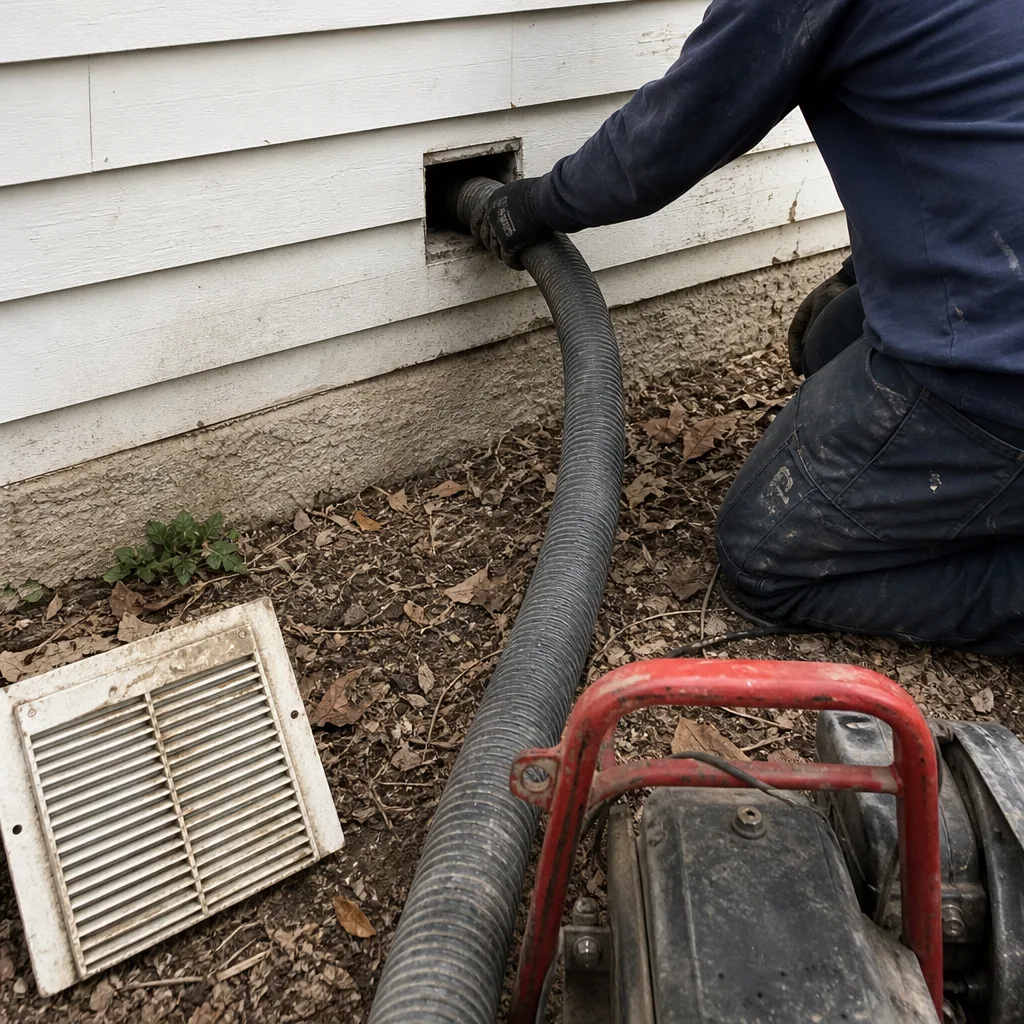 Before
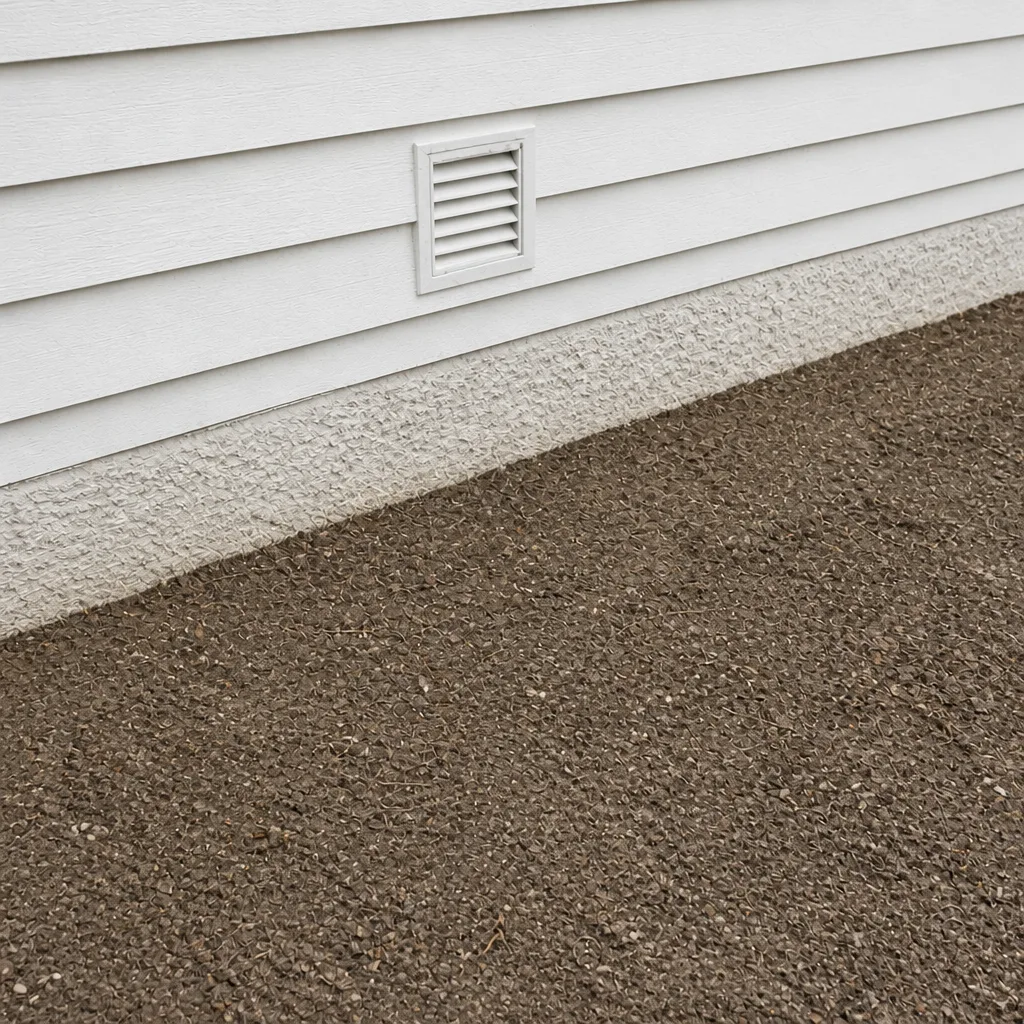 After
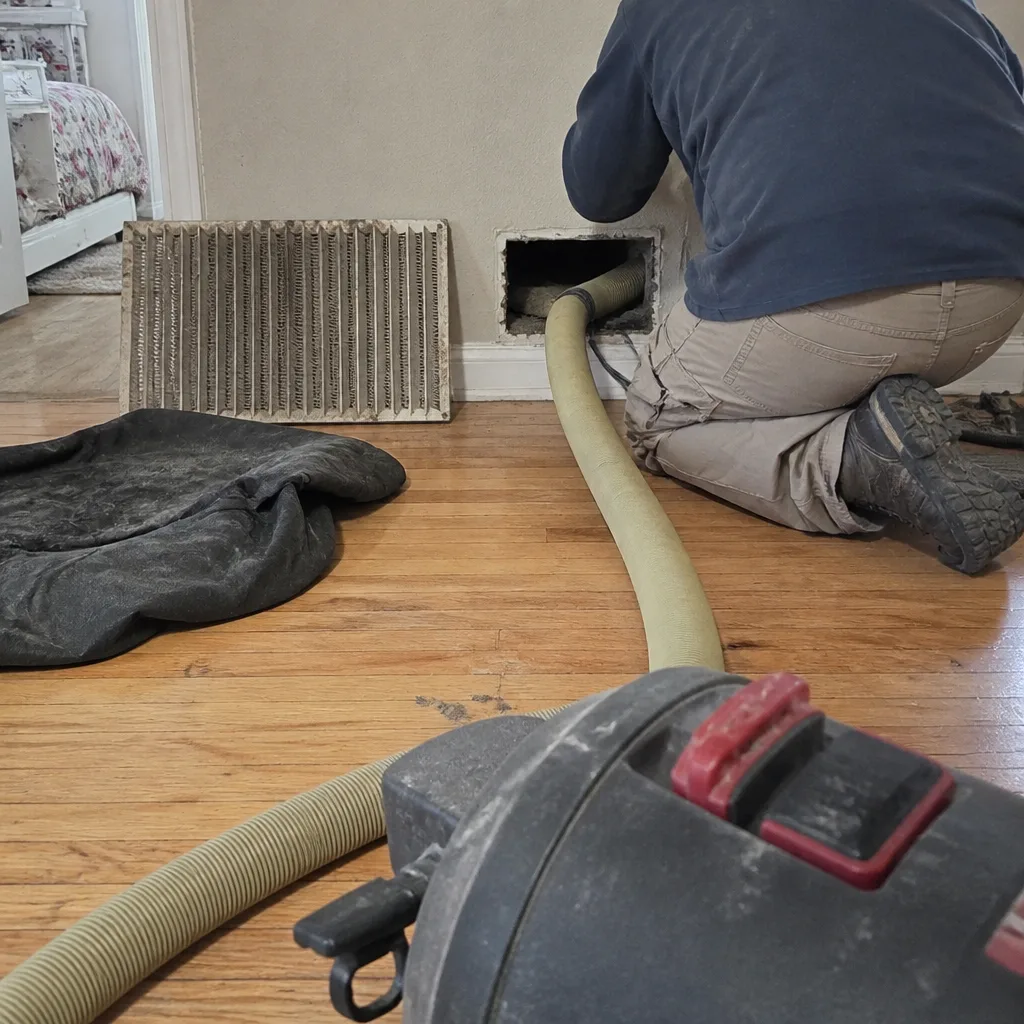 Before
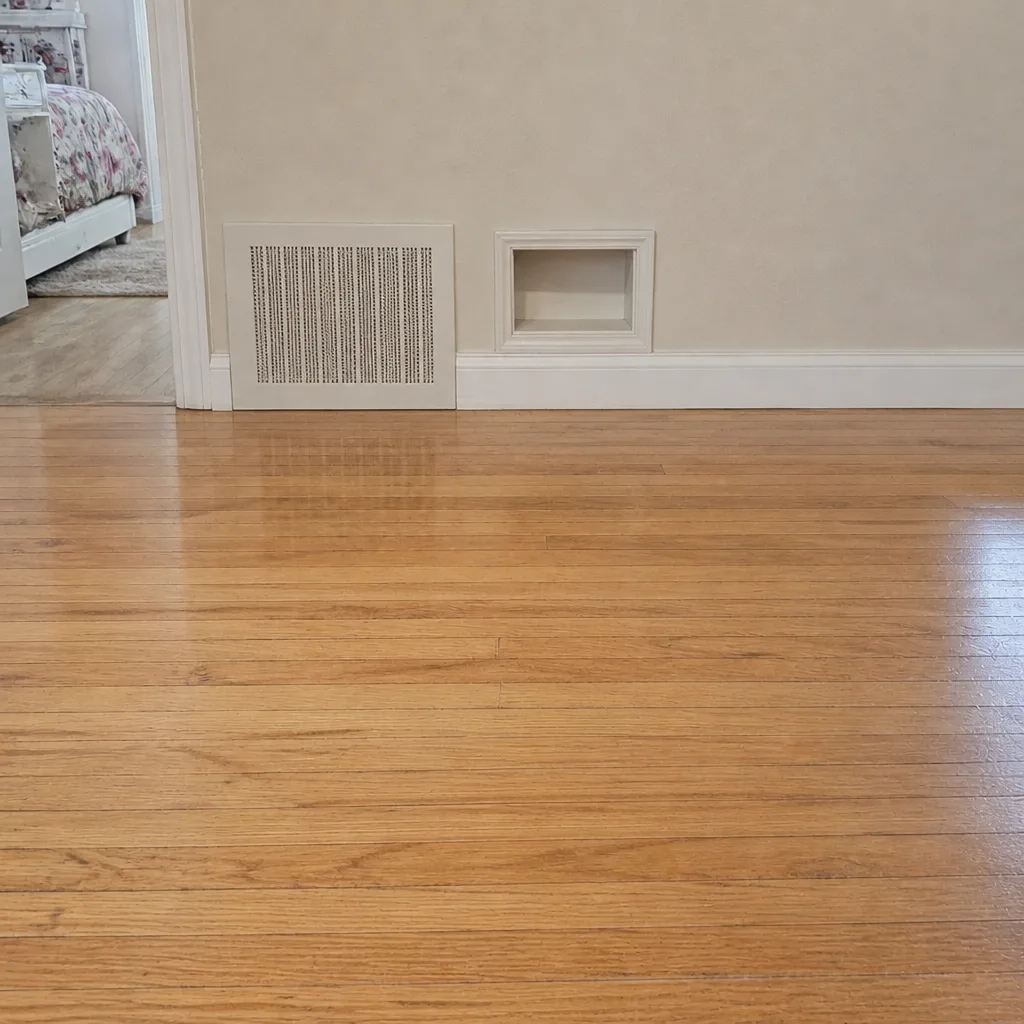 After
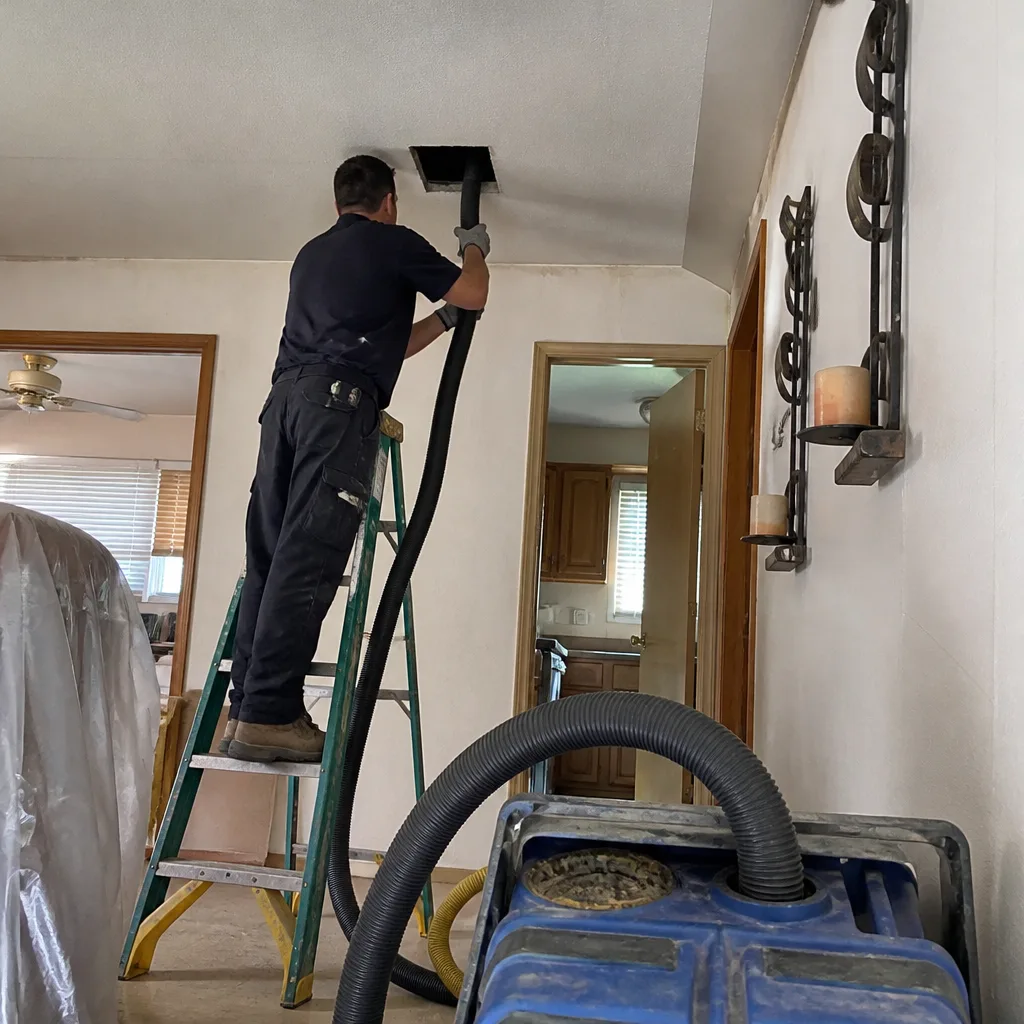 Before
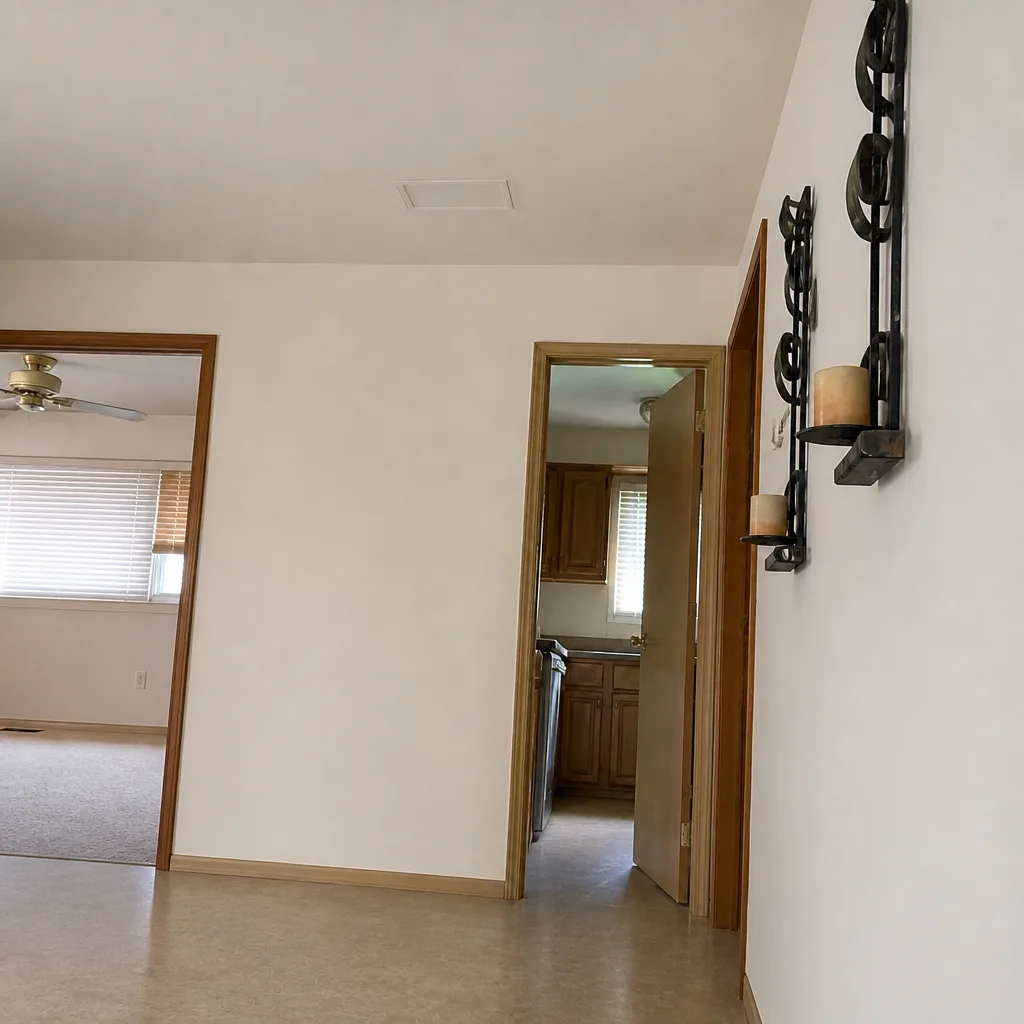 After
When to Call a Professional
Call a professional if any of the following is true: airflow is noticeably weak at more than one register; you can see nothing but dust when you pull a register grille; you smell mustiness, dust or anything chemical coming from the registers; doors swing on their own when the HVAC runs; you’ve lived in the home for several years without a professional cleaning; or you just finished a remodel that exposed the ductwork. Nampa Duct Cleaning offers free estimates in Nampa, so the cost of finding out whether you have a problem is zero. Call (833) 842-1697. We answer 24/7. Fast dispatch from 7am to 7pm, Sunday through Friday. Our technicians have up to 13 years of experience, we use Rotobrush, Nikro and Abatement Technologies equipment, and we can repair ductwork on the same visit if the inspection turns up a collapsed or disconnected run.
Frequently Asked Questions
Weak airflow at one register points to the ducts; weak airflow at every register points to a filter, blower or main trunk obstruction. Uneven room temperatures point to pressure imbalance from leaks, not equipment sizing. If the equipment turns on, runs, and heats or cools like normal, the problem is almost always duct-side. Call (833) 842-1697 for an exact quote if you want a professional to check the ducts before you consider equipment replacement; estimates are free.
Small puffs are normal for the first few seconds, but visible dust clouds every startup mean debris is sitting inside the run and getting lifted with each cycle. That’s the classic pattern for ducts that have been cleaned only at the trunk, or never cleaned at all. A proper contact-cleaning with a rotary brush system removes the wall-attached material that causes this, so the puffs stop. Call (833) 842-1697 to book an inspection; estimates are free.
Often yes, especially if the home was built in Nampa recently. New construction leaves drywall dust, construction grit and insulation fibers in the ductwork even when openings were taped. Between that and the higher pollen and irrigation dust load in this area, a first cleaning in the early years is routine, not excessive. Call (833) 842-1697 for an exact quote; estimates are free.
Every three to five years for most homes, with a yearly check of the registers in between. Homes with pets, allergy-sensitive occupants, recent remodels or heavy nearby construction should shorten that interval to every two to three years. A large walk-in closet with a return plenum inside it is another case where the interval should be shorter. Call (833) 842-1697 for an exact quote; estimates are free.
Collapsed flex duct gets replaced segment by segment, not the entire system. Disconnected runs get reconnected and properly sealed. Metal trunk seams and boot connections can usually be sealed with mastic and mesh rather than replaced. Duct repair is part of what we do, and we do it on the same visit as a cleaning when we can. Call (833) 842-1697 for an exact quote; estimates are free.
Cheap quotes usually skip the branch ducts, use air-only equipment without a rotary brush, or don’t include proper containment. That produces a fast job that looks clean at the register for a week and does almost nothing for the duct walls. Our quotes are per system, agreed in writing before work starts, and we use professional equipment from Rotobrush, Nikro and Abatement Technologies. Call (833) 842-1697 for an exact quote; estimates are free.
The Bottom Line
Duplicate symptom patterns point to different root causes, and the first job in any duct troubleshooting is figuring out which one you’re dealing with. Weak airflow at one register, doors that move on their own, dusty smells and visible debris each have a distinct duct-side answer. Cleaning solves debris. Repair solves leaks, collapses and disconnections. Ignoring either one for years is the expensive path, because Nampa’s clay-heavy soil, irrigation dust and long pollen season push accumulation faster than most homeowners expect. A free estimate takes the guessing out of the equation, and our team can diagnose and fix duct problems on the same visit. Call (833) 842-1697. We answer 24/7. Fast dispatch from 7am to 7pm, Sunday through Friday.
Written by the team at Nampa Duct Cleaning.