
Last updated November 15, 2026
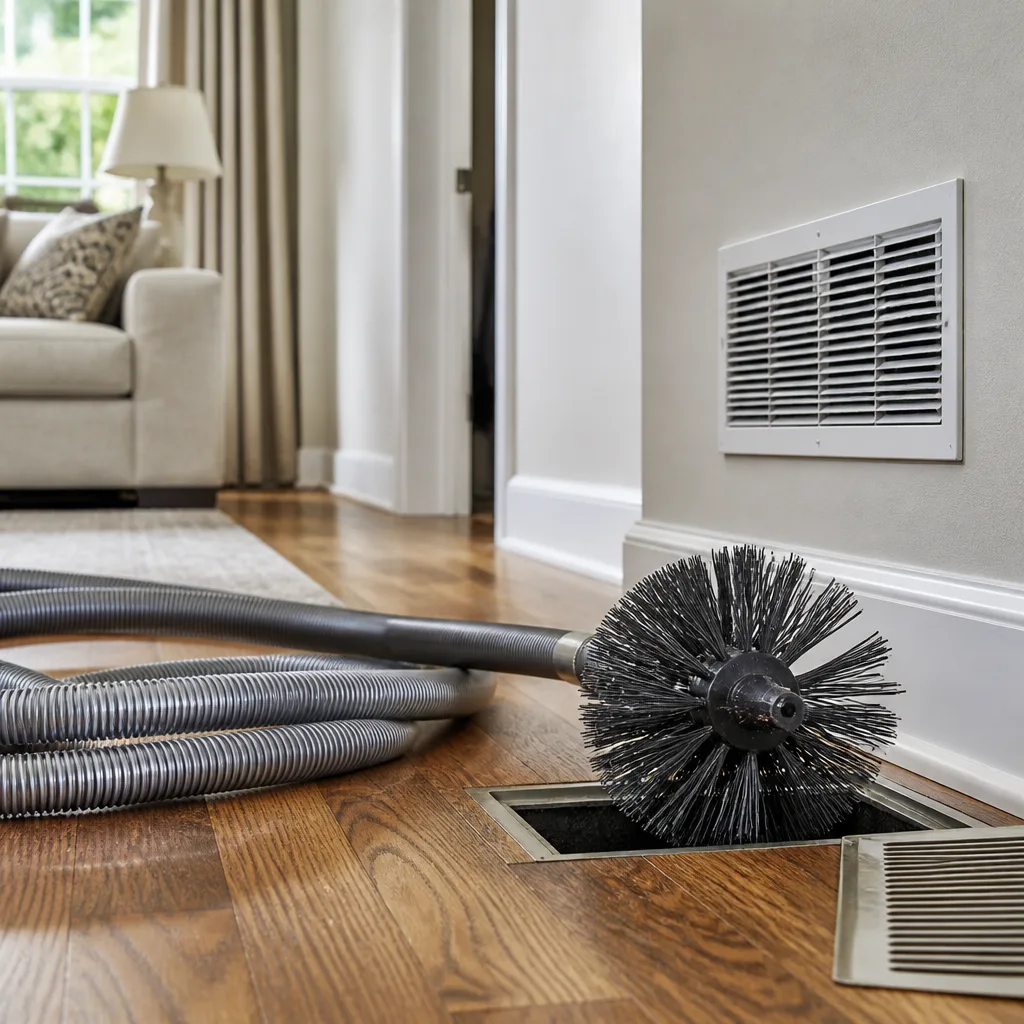 Whole-home duct cleaning
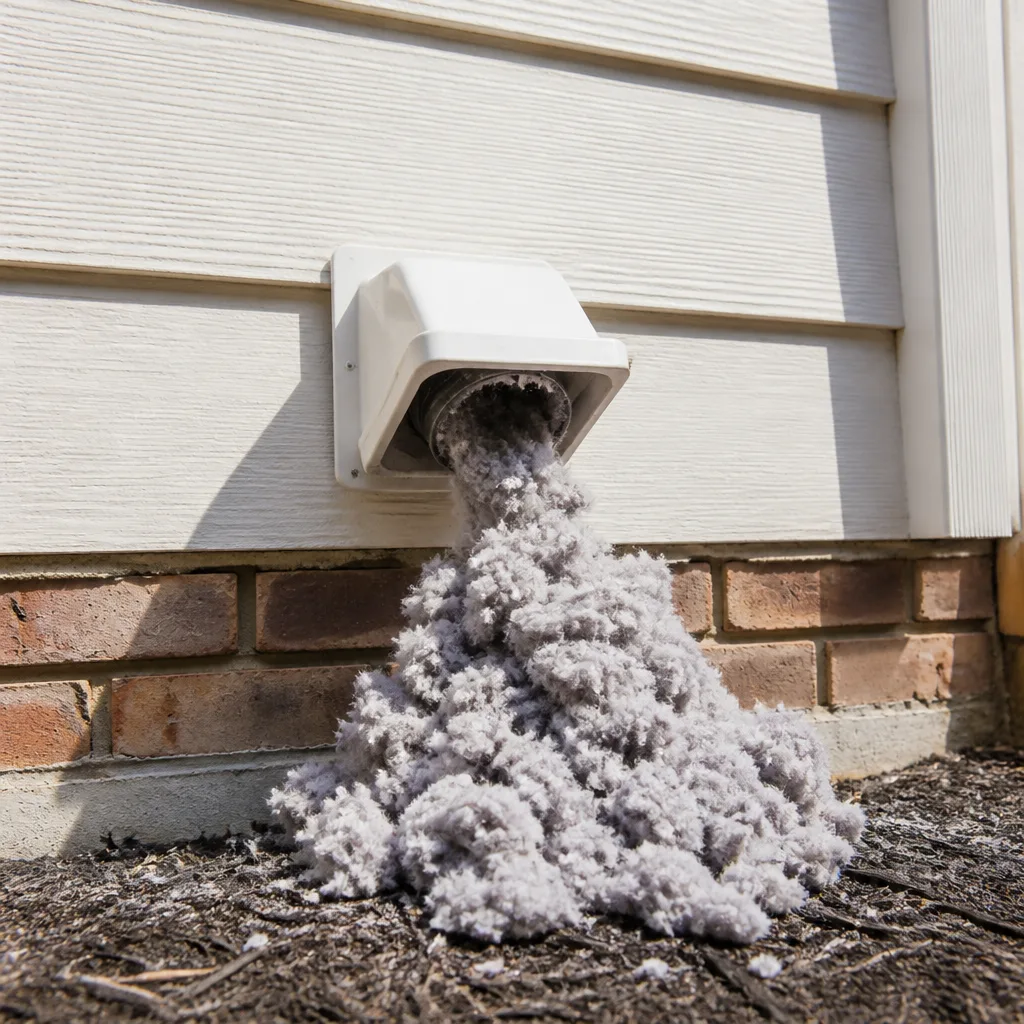 Dryer vent cleaning
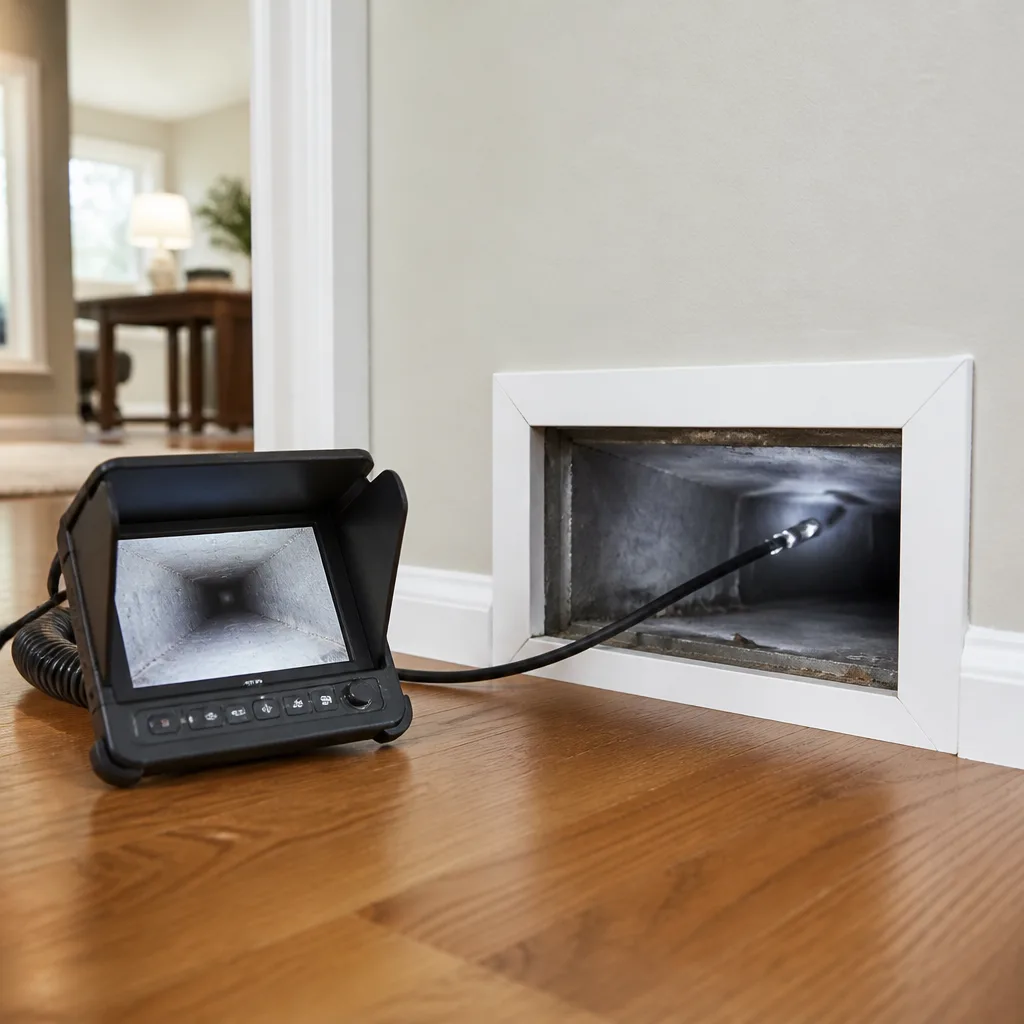 Camera inspection
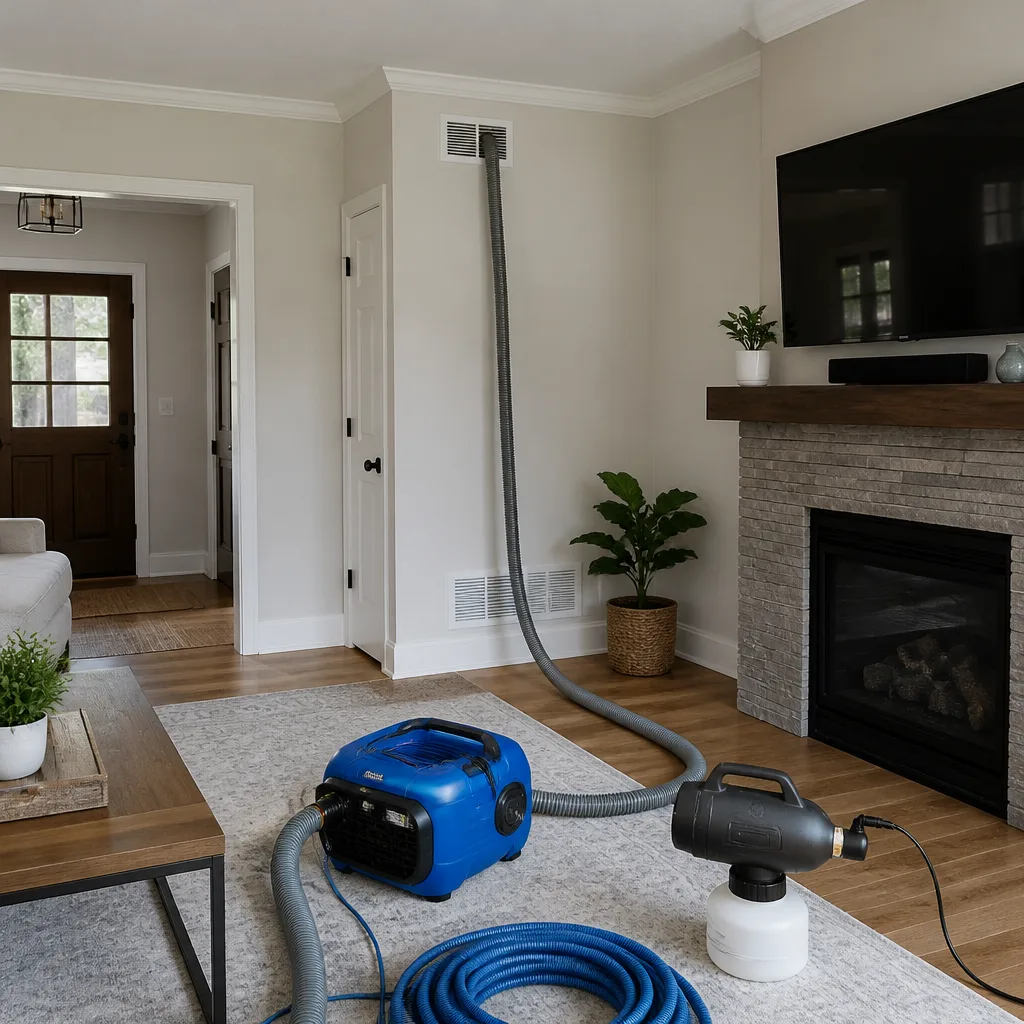 Sanitizing & deodorizing
Whole-system duct and dryer vent check with before-and-after photos - you see exactly what came out of your vents
That "$99 whole-house special" is a bait ad - the real number appears once they are in your hallway, or the "clean" is a shop-vac at the register. We photograph the inside of your ducts before and after instead.
Air Duct Cleaning Warning Signs: A Nampa Homeowner’s Reference Guide
When an HVAC technician tells a homeowner the system is “running fine,” they’re evaluating the mechanical unit: the blower, the heat exchanger, the coil, the refrigerant charge. They are not evaluating the duct network delivering that conditioned air to every room. A perfectly tuned furnace connected to fouled or degraded ducts produces the same symptoms as a failing furnace, and that gap explains most of the duct problems we’re called out to in Nampa. This guide walks through the performance signals that point to the distribution system rather than the equipment, what each visible pattern means, and when cleaning becomes necessary instead of optional.
Quick Answer
Ducts need attention when the system shows performance change, not just visible dust: uneven airflow between rooms, musty or chemical smells that persist after startup, dark or mineral staining around registers, filters clogging faster than they used to, or debris left behind after remodeling. Any one of these signs is worth an inspection. Two or more together usually means debris has accumulated inside the ductwork and the HVAC unit is working harder to move the same air.
Styles & brands we work with
- Whole-home duct cleaning
- Dryer vent cleaning
- Camera inspection
- Sanitizing & deodorizing
Table of Contents
- Uneven Airflow Between Rooms: What Your Ducts Are Telling You
- Persistent Odors: Start-Up Smell vs. Something Growing in the Ducts
- Reading Register Debris Patterns
- Filter Change Frequency as a Contamination Signal
- Post-Renovation Duct Contamination
- Dryer Vent Warning Signs Most Homeowners Miss
- What a Proper Duct Inspection Actually Covers
- When Cleaning Is Necessary and When It Isn’t
Uneven Airflow Between Rooms: What Your Ducts Are Telling You
Hot and cold rooms are usually blamed on dampers or a weak HVAC unit. The distribution system is the more common culprit.
Dampers sit near the furnace and adjust how much air reaches each branch. When a room runs cold no matter how a damper is set, the restriction is often downstream of the damper: debris built up at a branch takeoff, a flex section that has partially collapsed or kinked, or a disconnection between the trunk and the run that the homeowner cannot see. Nampa’s mix of older bungalows and newer tract construction means we work with both metallic trunk and branch systems and long runs of flex duct, and the flex sections fail at bends where the installer left too tight a radius.
Here’s how to separate a damper issue from a duct issue without opening anything:
- Note which rooms are weak. A single weak room points to that branch; half the house points to the trunk or the main supply plenum.
- Check the register airflow by hand at full fan. Compare it to a strong room at the same damper setting.
- Listen at the weak register. A whistling sound means restriction, not absence of air.
- Look for a duct running through an attic or crawl space bend with a visible kink or sag between supports.
- If the weak room changes seasonally with the AC versus the furnace, note that too; unbalanced supply can behave differently in heating mode.
What those notes point to matters. A single weak branch with a whistle usually means a disconnection or a collapsed flex section at that takeoff, and no amount of cleaning will fix it. A whole-house drop in airflow often means the trunk has loaded up with debris and the blower is pushing against resistance. That second case is where duct repair and cleaning overlap, and where a professional assessment saves money over guessing.
Persistent Odors: Start-Up Smell vs. Something Growing in the Ducts
Most homes have a brief smell when heat first comes on after months idle. That’s normal dust burning off the heat exchanger, and it clears within a few minutes. A smell that persists, changes character, or returns the moment the fan starts is a different signal.
Three persistent odor profiles point to three different problems in the ductwork itself:
- Musty, earthy, damp smell: biological growth, usually on the interior of flex duct or on damp insulation in a return chase. In Nampa’s dry climate this is less about general humidity and more about a localized moisture source, such as a plenum sweating during cooling season or a return duct running through a damp crawl space.
- Chemical or plastic smell: deteriorating duct liner or off-gassing from damaged flex. This is an equipment-material problem, not a cleaning problem alone.
- Burning or hot-metal smell: combustion-related, so this one needs an HVAC technician, not a duct specialist. Shut the system down and get it looked at.
Our technicians have up to 13 years of experience, and the biggest pattern they report is a homeowner treating a musty odor as an air-quality annoyance when it’s actually a liner issue. A musty smell that keeps returning after a filter change and a cleaning tells us the contamination has a source we haven’t addressed. Rotobrush contact cleaning scrubs the duct walls physically, but if the liner is deteriorating, cleaning it just releases more material into the airstream. That’s why a proper inspection looks at duct condition, not just cleanliness.
Reading Register Debris Patterns
What you see on the register grille is a sample of what’s inside the duct feeding it. The color and texture of the deposit tells you quite a lot about the source.
Here’s what the common patterns usually mean:
- Dark, oily or sooty film: often combustion bypass, meaning exhaust gases aren’t venting correctly and are being pulled back into the return. This is a safety issue, not a cleaning schedule issue. Have the combustion side checked first.
- White, chalky mineral dust: usually humidifier scale thrown off from a whole-home humidifier or a hard-water issue on steam units. The ducts will need attention, but the humidifier itself needs service or replacement or the deposit returns.
- Fibrous, greyish material: deteriorating interior duct liner or attic insulation fiber that has been drawn into a return. This is the one that most often points to a repair, not just a cleaning.
- Fine, uniform household dust on the grille face: normal, no action needed beyond a wipe-down.
The pattern matters more than the amount. A light deposit of mineral dust is one thing; a fibrous grey buildup on the grille of a room nobody uses is a different conversation. Look at every register in the house, not just the main ones; a single anomalous register is itself a diagnostic clue. In Nampa, the dry spring dust season loads the return side of every system, and that’s the deposit you’ll see first.
Filter Change Frequency as a Contamination Signal
If you used to change your filter every three months and now you’re changing it every four to six weeks, that’s a system signal, not a filter problem. Filters only load faster when something upstream is adding material to the return air.
Usual causes, in roughly the order we find them:
- Return-side contamination. Dust and debris accumulated inside the return trunk and plenum get stirred up and drawn through the filter faster. This is common in homes where the return run is a long, low-velocity chase.
- Leaky return ductwork. A gap in the return pulls attic or crawl space air into the system, which carries insulation fiber and dust with it.
- A new pet, a renovation, or a new vacuum. Lifestyle changes can shift filter loading, but they tend to resolve. If frequency stays elevated, it isn’t lifestyle.
- Wrong filter rating. A very high-MERV filter on an older blower can load faster than the system was designed for. That’s an airflow problem, not a duct-cleaning problem.
The correct answer isn’t always a better filter. Sometimes it’s addressing the return side first, then settling on the right filter for the blower. We stock and install Honeywell and Aprilaire filtration products, so if a homeowner is going to upgrade filtration anyway, it can make sense to assess the whole system in one visit rather than adding a separate contractor into the mix later.
Post-Renovation Duct Contamination
Nampa has an active remodeling market, and interior construction is the single most common cause of short-term duct contamination we see. Drywall dust and insulation fiber are fine enough to pass through a filter rated for household dust, and once they settle inside the ductwork, they don’t leave on their own.
The specific warning signs after any interior work:
- Visible fine white or pink dust on horizontal surfaces for weeks after the final cleanup.
- Registers in rooms that were worked on showing deposits that don’t match the rest of the house.
- Filter loading that spikes immediately after a renovation and stays high.
- A metallic or chalky smell the first week the system runs after the work.
- Newly installed insulation or drywall dust visible in a return grille that sits low on a wall near the work area.
The fix isn’t a shop vacuum held to a register. Drywall dust is fine enough that it needs HEPA-rated capture at the source, which is why we use Abatement Technologies equipment: the same negative-air and containment standard professional remediation crews use. A rotary brush system behind proper containment pulls the material out of the duct instead of stirring it through the house. If you’re planning interior work in Nampa, timing a duct cleaning for after the final cleanup is a reasonable way to reset the system once instead of chasing dust for a year.
Dryer Vent Warning Signs Most Homeowners Miss
The dryer vent is part of the same indoor-airflow picture as the HVAC ductwork, and its warning signs are separate. Lint accumulation in the vent line reduces airflow, extends drying time, and increases fire risk. These are the signals worth acting on:
- Clothes take noticeably longer to dry than they used to, or a second cycle is needed for the same load.
- The dryer body is hot to the touch on top or on the door during a cycle.
- The exterior vent flap doesn’t open fully or opens weakly.
- Lint is visible around the outside of the vent hood or on the ground below it.
- A musty or hot smell in the laundry area during drying.
- The flexible transition duct behind the dryer is crushed or kinked rather than short and smooth.
Dryer vent cleaning is a standalone service for us, not an add-on to a duct cleaning, because the two systems fail in different ways and on different schedules. A flexible vinyl transition duct is worth replacing with a smooth metal one; a long, sagging run through an attic or wall is worth cleaning and, in some cases, re-routing. If you’ve never had the vent line inspected, that alone is a reason to book a dryer vent cleaning visit.
What a Proper Duct Inspection Actually Covers
An inspection that only looks at the register grilles isn’t an inspection. A useful one follows the system from the return grille to the supply registers and writes down what it finds.
A thorough walk-through covers:
- Return side. Return grilles opened and the interior of the return chase inspected where accessible.
- Trunk and plenum. Visual and camera check for debris accumulation, moisture, and liner condition.
- Branch takeoffs. Each takeoff checked for restriction, disconnection, and collapsed flex.
- Register boots. Interior of the boot checked for gaps where it meets drywall or flooring, a common source of attic or crawl space air infiltration.
- Duct condition versus cleanliness. A duct can be clean and still need repair; a duct can be intact and still need cleaning. Both are reported separately.
- Filter and blower compartment. Filter sizing, loading, and whether the blower cabinet shows signs of contamination.
- Dryer vent, where the customer wants it included. Treated as its own system with its own report.
Before-and-after photos of the customer’s own ducts are part of the report, because a homeowner should be able to see what was found and what changed. If a technician can’t show you photos of your ducts, ask for them. Every home is different, and one flat price per system agreed before the work starts keeps the conversation about the ductwork and not the invoice.
When Cleaning Is Necessary and When It Isn’t
Not every home needs duct cleaning, and a company that tells you otherwise before looking is telling you something about itself. Here’s the honest breakdown.
Cleaning is worth doing when:
- Debris is visible inside the ducts or on the register grilles, and the deposit type points to a source that’s fixable.
- Filter change frequency has risen and stays high after a return-side check.
- The home has had an interior renovation with drywall dust in the system.
- A pet, a smoker, or a recent move has introduced material the ducts are holding.
- An inspection found biological growth or liner deterioration that makes cleaning a first step before repair.
Cleaning is not urgent when:
- There’s no visible debris and no performance signal, only general dust in the house.
- The ducts are newer, sealed, and the system is balanced with a clean filter and healthy airflow.
- A single weak register turned out to be a closed damper. That’s a five-minute fix.
When the inspection does show damage, we offer duct repair as part of the same visit. Gaps, collapsed flex runs, and disconnected takeoffs are common in Nampa homes of a certain age, and cleaning alone won’t close them. For a fuller picture of what the cleaning side of that visit looks like, see our air duct cleaning page.
Common Mistakes to Avoid
- Blaming the HVAC unit for a distribution problem. A tune-up on a blower that’s fighting fouled ducts fixes nothing. Have the ducts inspected before you replace the equipment.
- Booking the cheapest coupon in the mailbox. A low advertised price that becomes a much larger invoice once the technician is on site is the classic bait-and-switch in this trade. Ask for one flat price per system before work starts.
- Skipping the return side. The return draws air through the system, and if it’s contaminated, cleaning only the supply side leaves the source in place.
- Using a shop vacuum on ductwork. A homeowner-grade vacuum doesn’t have the containment to keep fine dust from going back into the air, and it stirs more than it removes. Use HEPA-rated equipment or call a professional.
- Assuming a “cleaning” fixed a smell. If a musty smell returns within weeks, the source is likely liner deterioration or moisture, and that’s a repair conversation, not a repeat cleaning.
- Ignoring the dryer vent. Vent lint accumulation is a fire risk and is often the single most important airflow issue in the house. It’s a separate service for a reason.
- No photos. If the report doesn’t show before-and-after photos of your ducts, you have no way to know the work was done.
See the difference
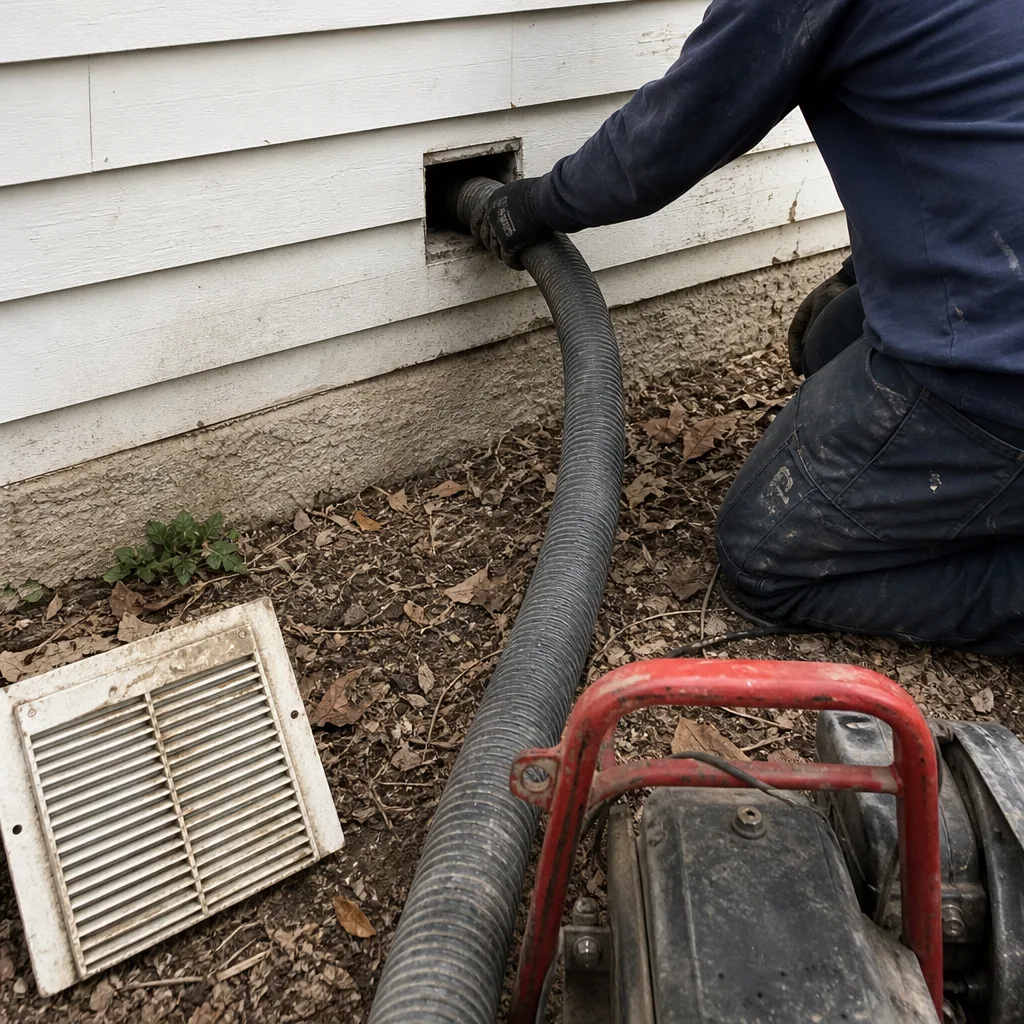 Before
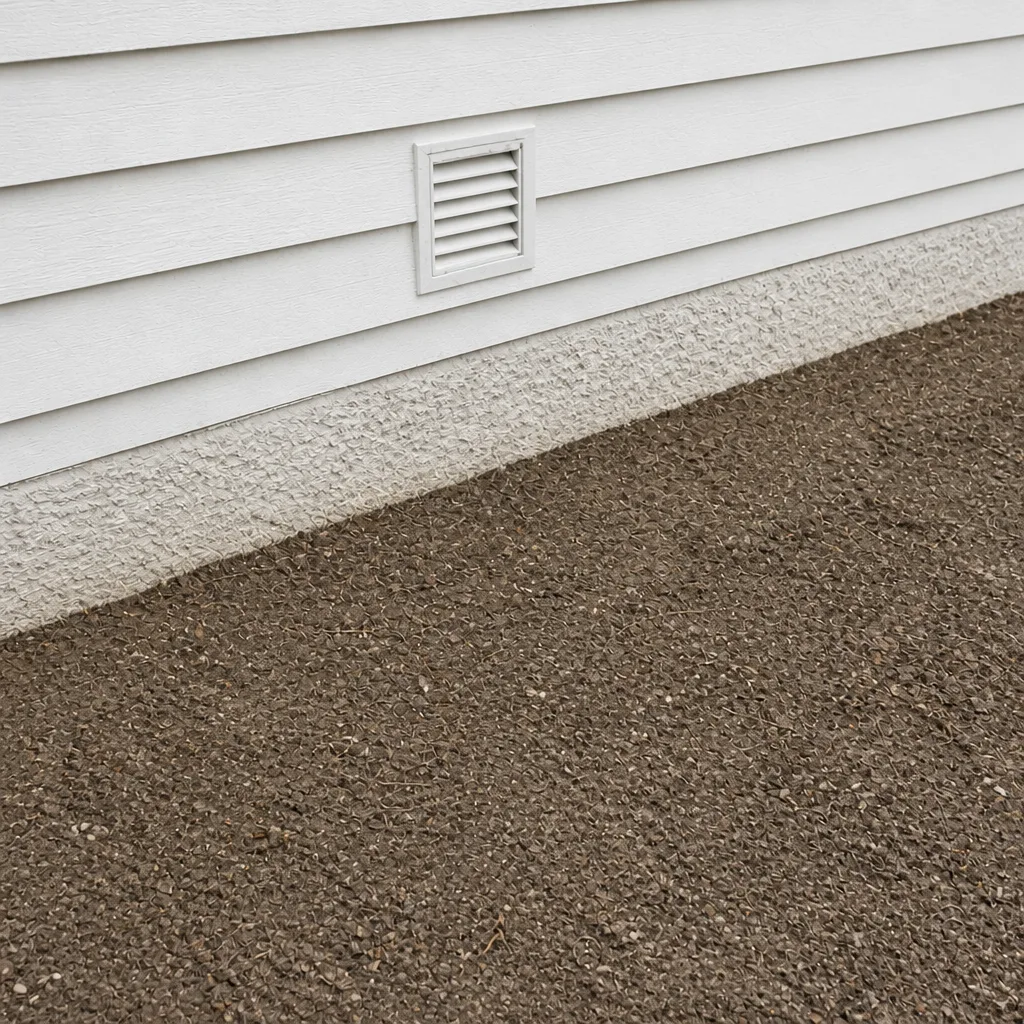 After
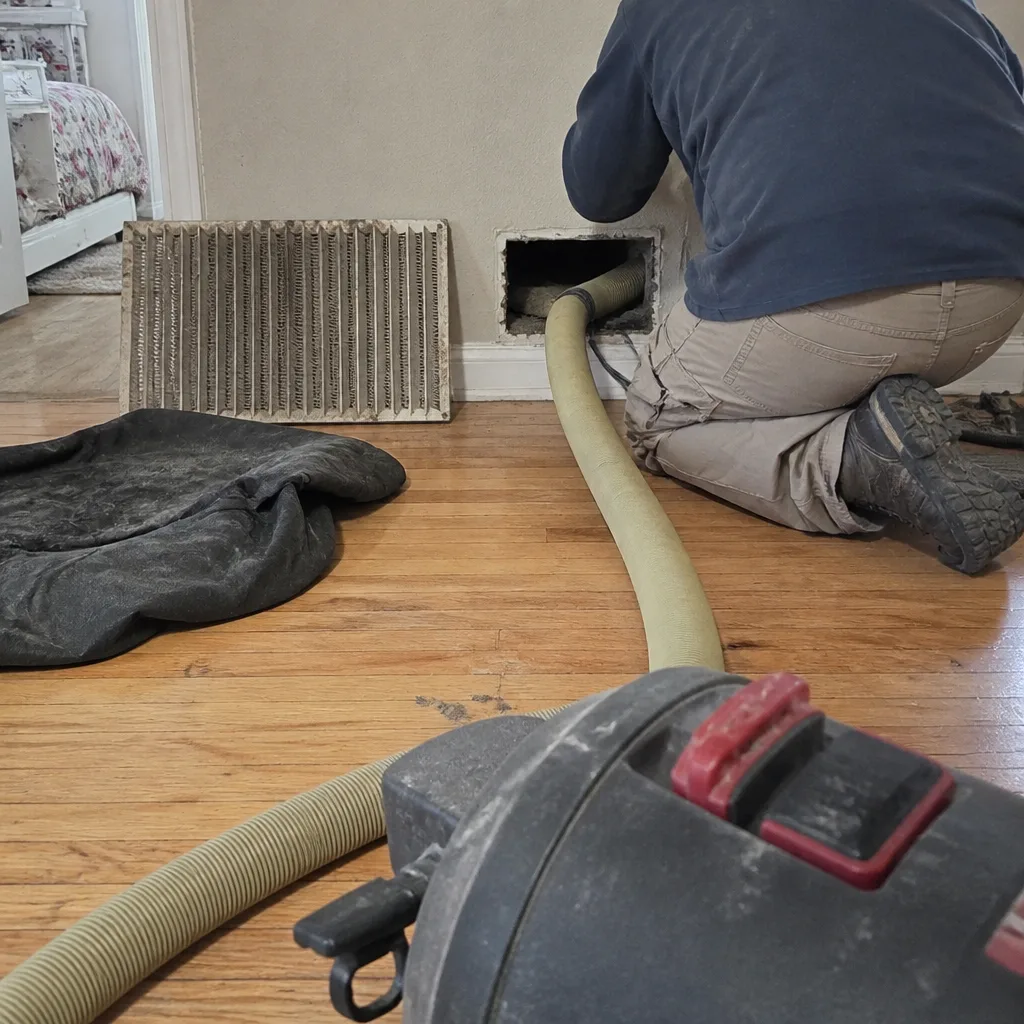 Before
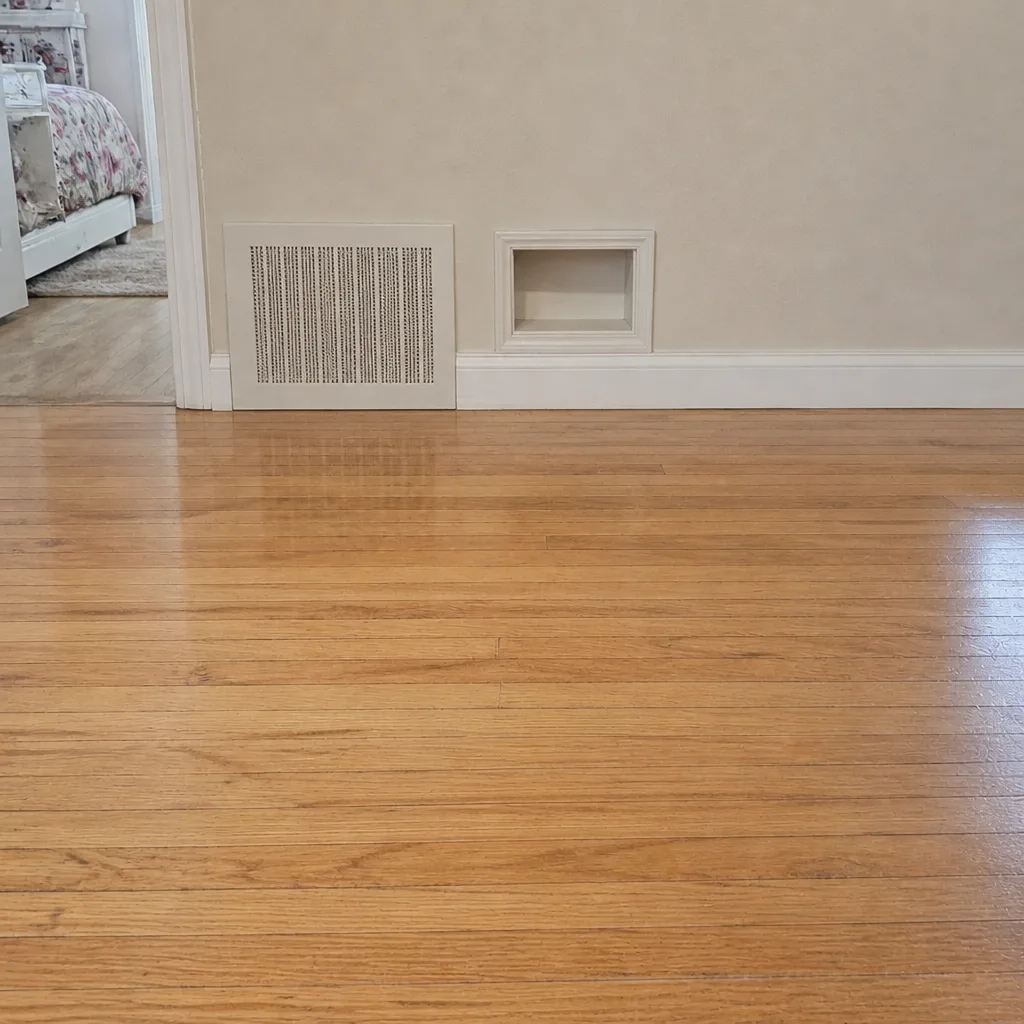 After
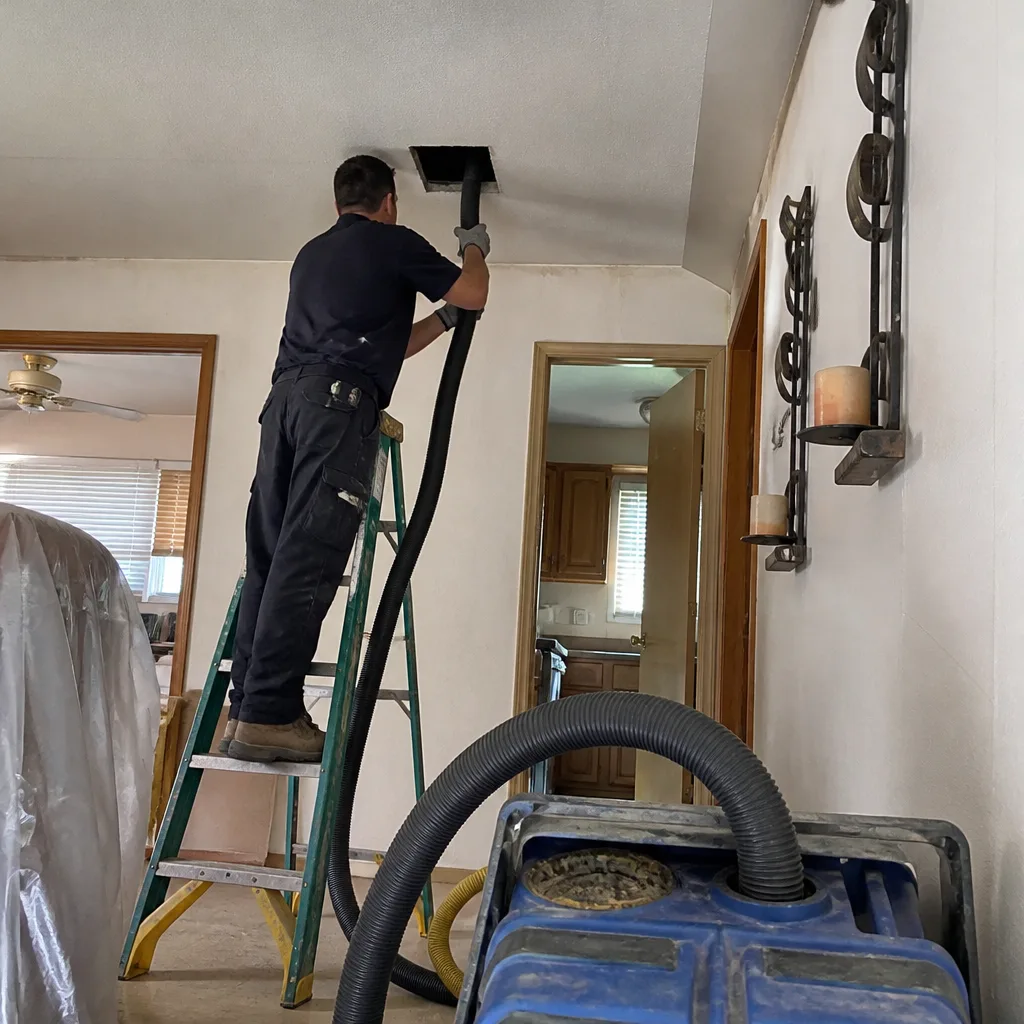 Before
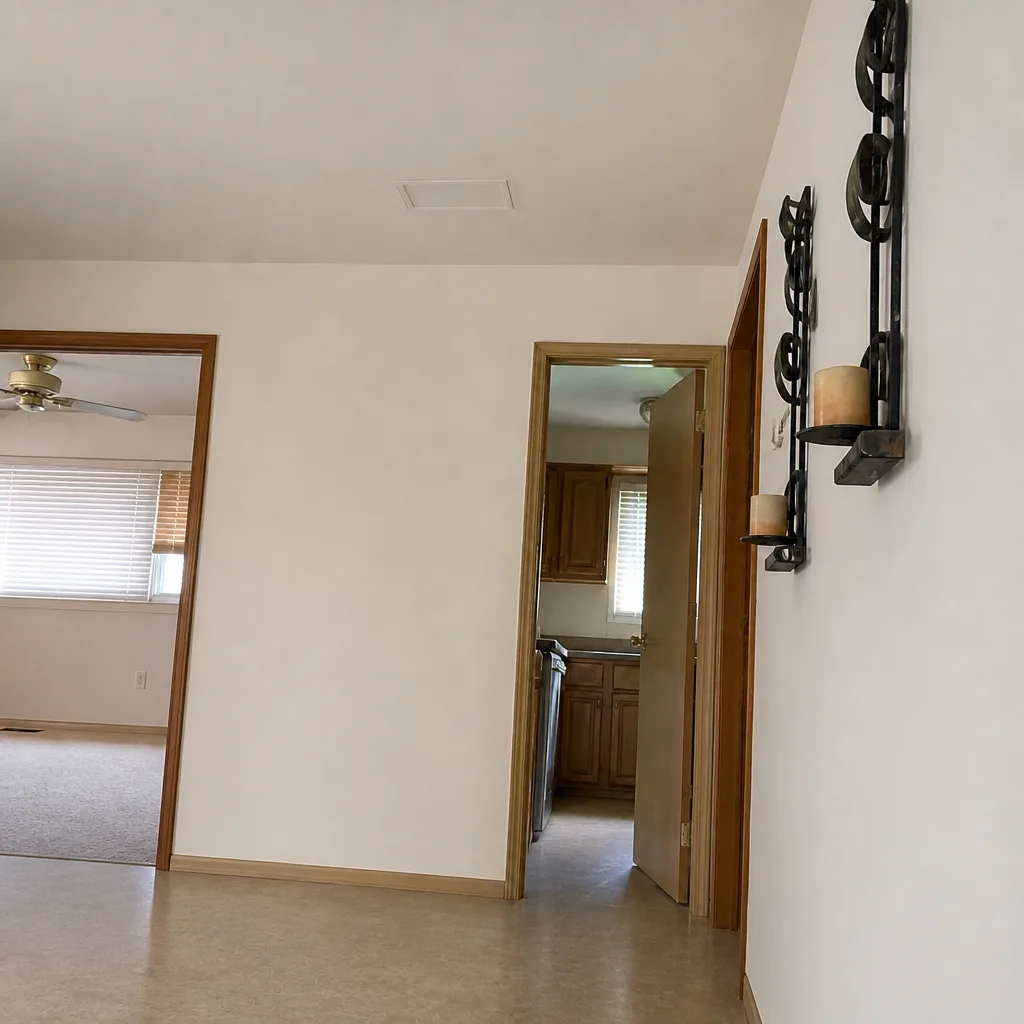 After
When to Call a Professional
Some of these signals are a homeowner project and some aren’t. A whistling register, a single weak branch, or filter frequency that jumped after a renovation are worth a professional look because the cause isn’t visible from inside the house. A musty smell that comes back after a filter change is worth a professional look because it may be a repair, not a cleaning. Any burning or hot-metal smell is worth a call to an HVAC technician immediately. And a dryer vent that’s never been inspected is worth a call on its own.
Nampa Duct Cleaning offers free estimates in Nampa. We use Nampa Duct Cleaning equipment from Rotobrush, Nikro, and Abatement Technologies, and we can work with your insurer where applicable. Call (833) 842-1697. We answer 24/7. Fast dispatch from 7am to 7pm, Sunday through Friday. If you want a broader sense of how we work in Nampa and the surrounding area, the main site covers it, and the written estimate always sets the final price.
Frequently Asked Questions
The clearest signs are performance changes, not just visible dust: uneven airflow between rooms, filters clogging faster than they used to, persistent musty or chemical odors that return after startup, or debris patterns on the registers that point to a specific source like liner fiber or combustion bypass. A single sign is worth an inspection; two or more together usually means debris accumulation inside the ductwork. Call (833) 842-1697 for an exact quote. Estimates are free.
Typical estimates for a whole-house system in the Nampa area fall in a range that depends on the size of the home, the number of branches, and whether duct repair is needed. Rather than quote a per-vent price, we price the system as a flat job and set the final price in the written estimate before work starts. Call (833) 842-1697 to book a free estimate.
Cheap quotes often cover a partial job: supply side only, no return, no inspection, no containment on the extraction, and no photos. The lower price becomes a much larger invoice once the technician is on site and the return or a damaged branch turns up. Ask any company for one flat price per system, agreed before work starts, with before-and-after photos of your own ducts. Call (833) 842-1697 for an honest whole-system estimate.
There’s no fixed schedule. Most homes don’t need duct cleaning on a timer, and the honest answer is to clean when a signal appears: a renovation, a pet added to the household, a return-side contamination issue, or a persistent symptom that points to the ducts. A home with no symptoms and a clean filter doesn’t need annual cleaning. Call (833) 842-1697 and we’ll tell you honestly whether your system needs it.
Before-and-after photos of your own ducts, taken during the visit, are the answer. A report that shows what was found, what was removed, and what was repaired is the record. If a company can’t produce photos, you don’t have a way to verify the work. Call (833) 842-1697 for a free estimate and ask what the report will include.
Sometimes. Uneven airflow is often caused by debris at a branch takeoff, a partially collapsed flex section, or a disconnected run, and any of those can be fixed. If the cause is a closed damper or an oversized room load on the HVAC unit, the fix is elsewhere. The inspection sorts out which one it is. Call (833) 842-1697 for a free estimate in Nampa.
The Bottom Line
Duct problems announce themselves through system performance, not just visible dust. Uneven airflow, persistent odors, register debris patterns, faster filter loading, post-renovation contamination, and dryer vent symptoms are the signals worth acting on. Most of them are fixable once a proper inspection identifies the source, and a few of them (combustion smells, musty smells that return) are reasons to look at the equipment side too. Cleaning, repair, and dryer vent service are separate jobs for a reason, and any valid quote should reflect that. If you’re not sure which one applies, get the ducts looked at by someone who uses real equipment and shows you photos of the result.
Written by the team at Nampa Duct Cleaning.