
Last updated November 15, 2026
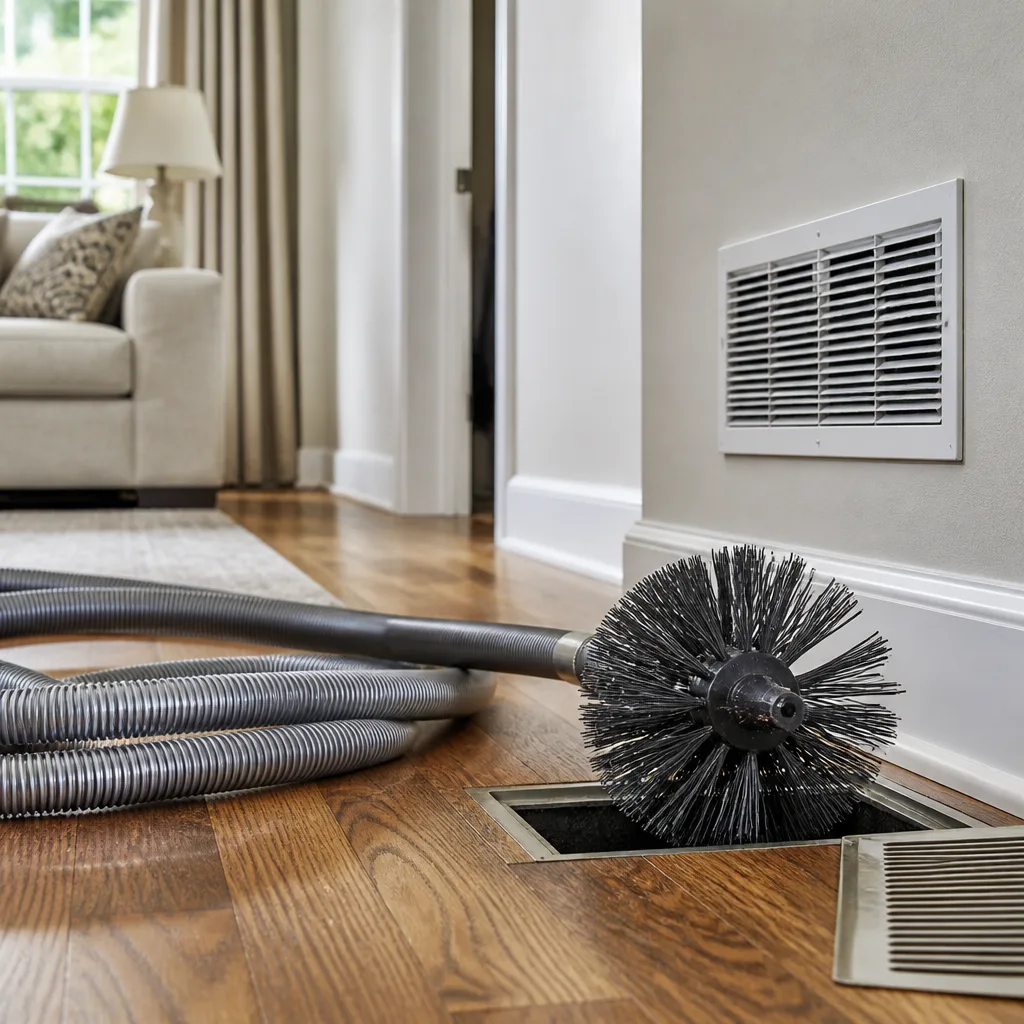 Whole-home duct cleaning
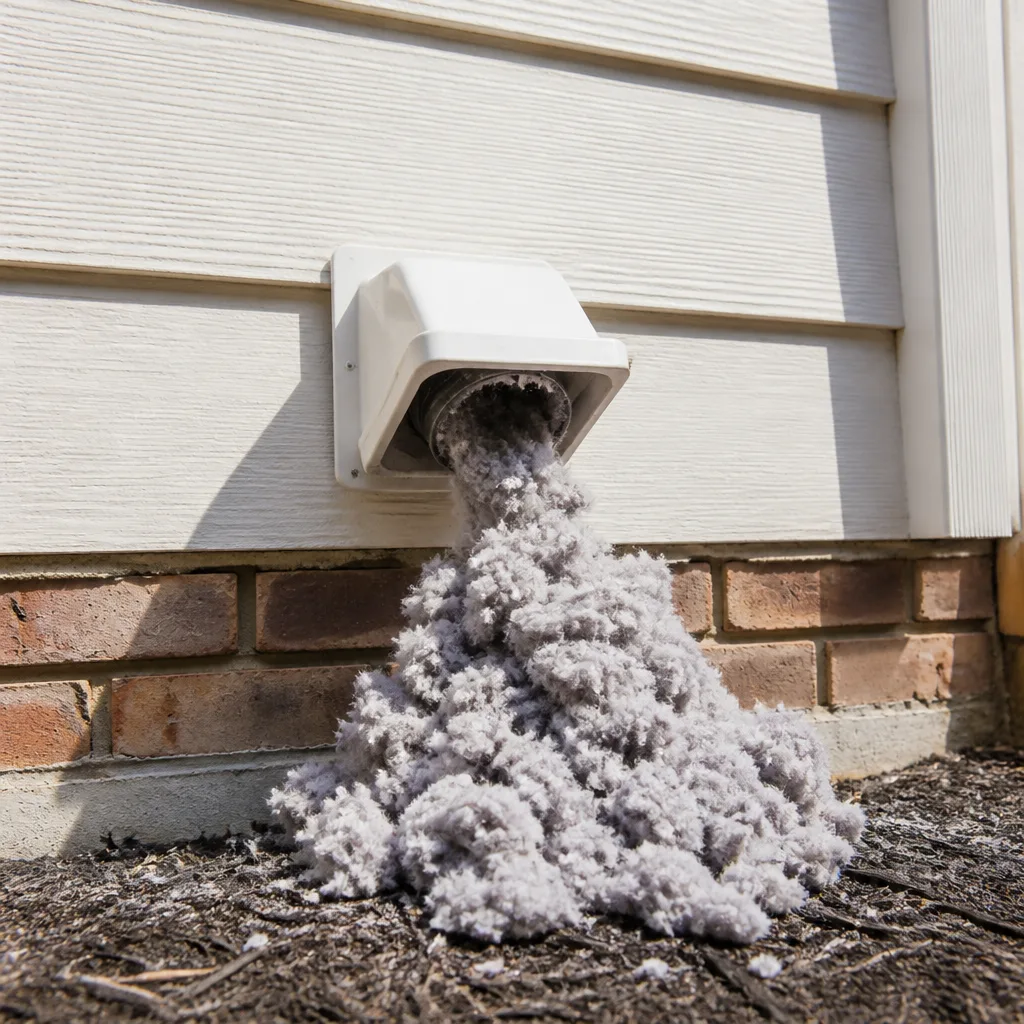 Dryer vent cleaning
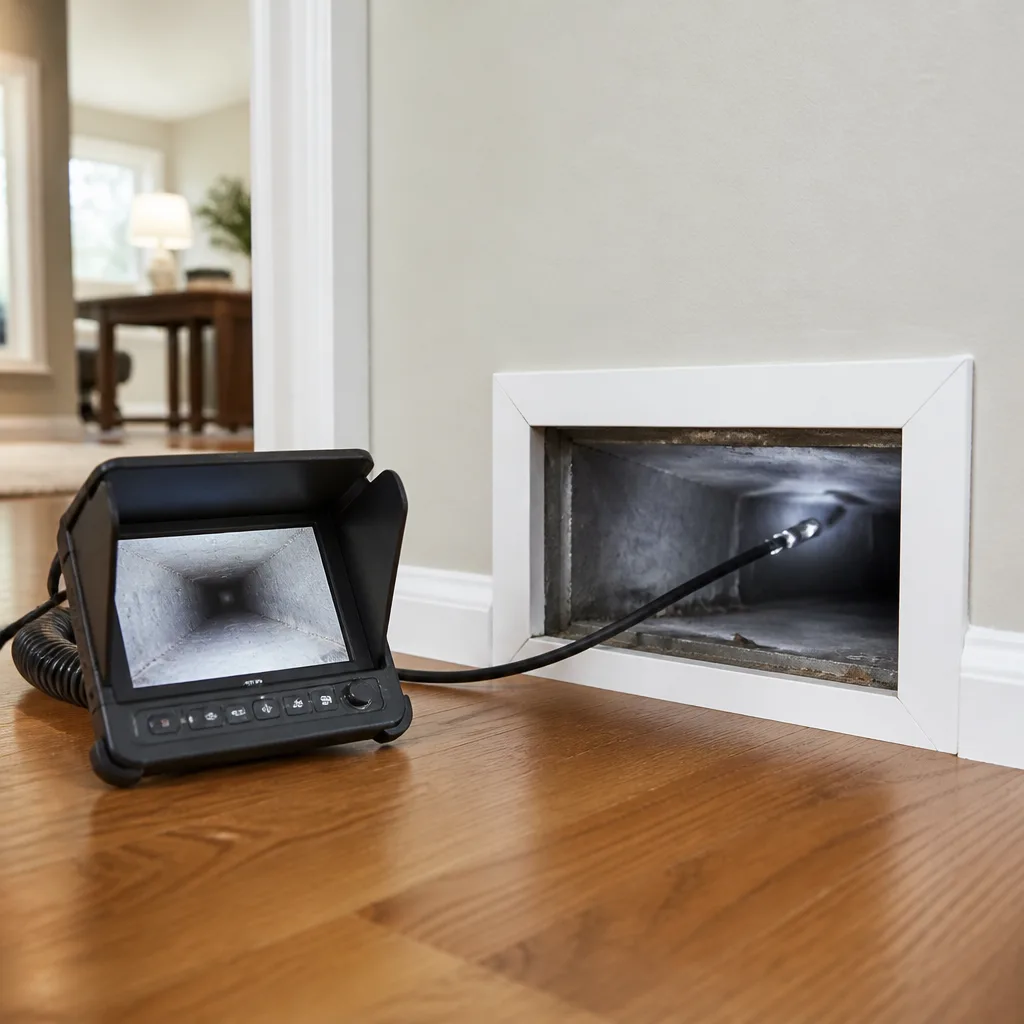 Camera inspection
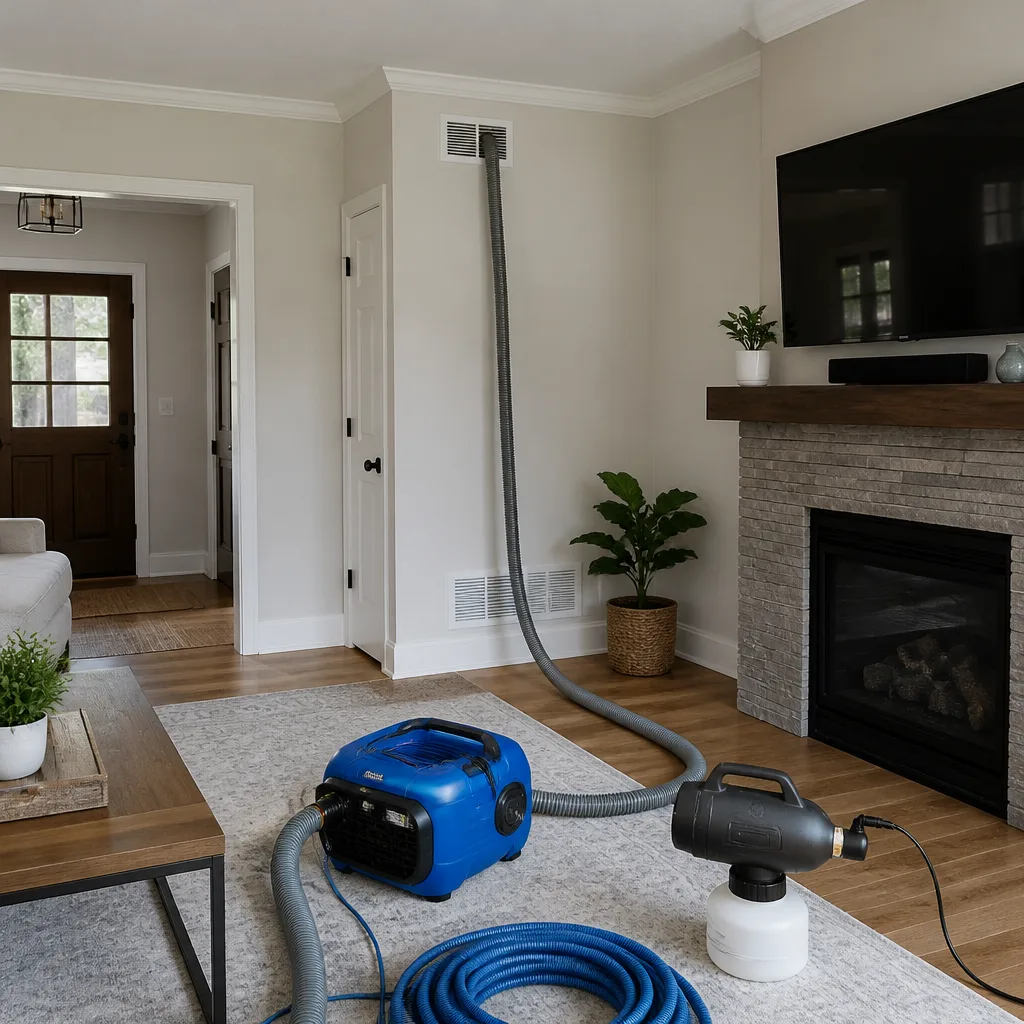 Sanitizing & deodorizing
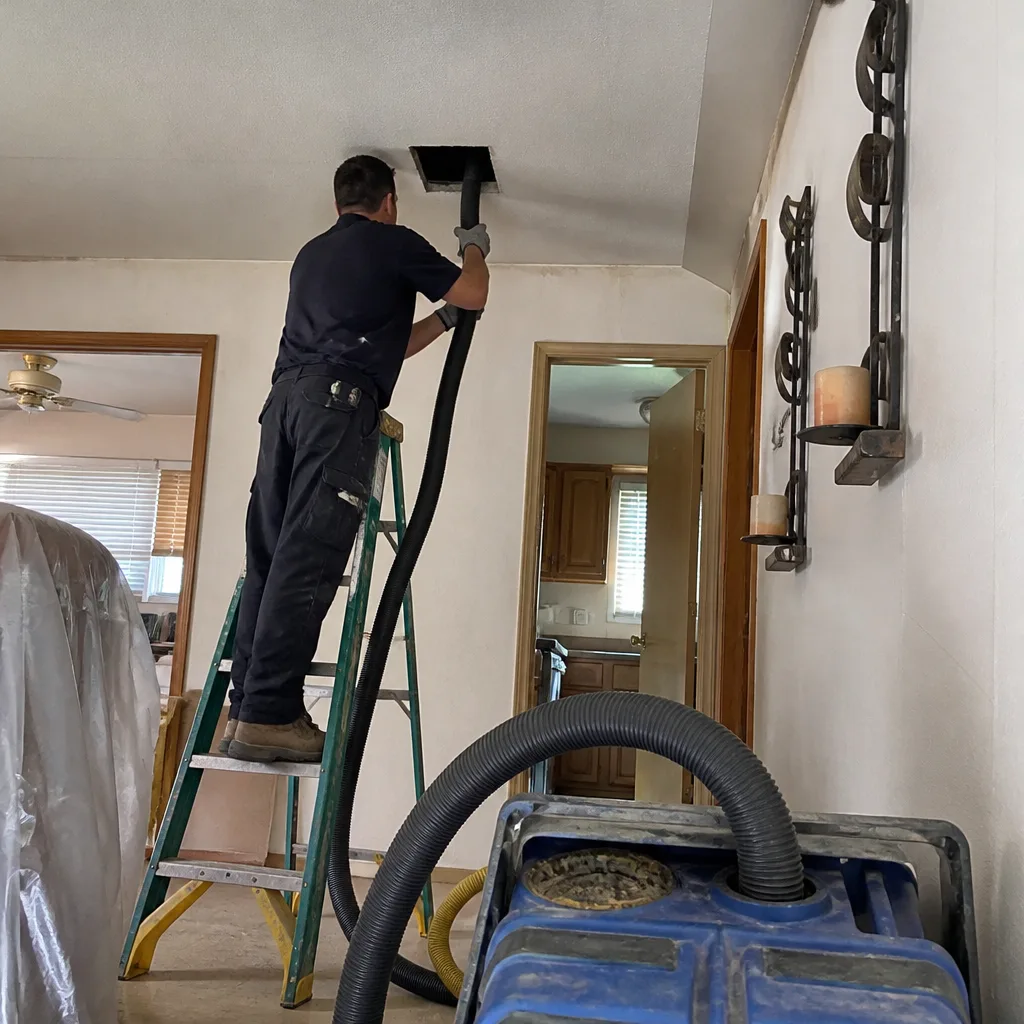
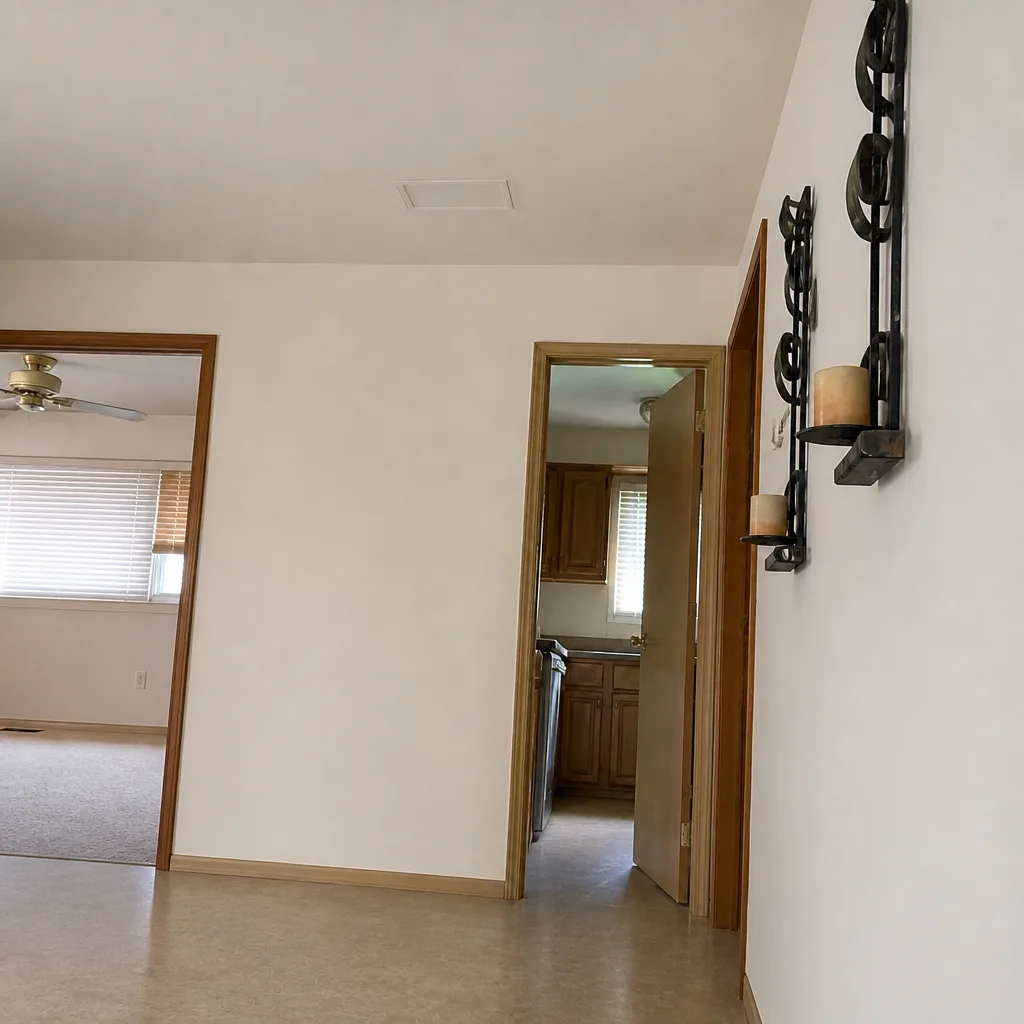
Whole-system duct and dryer vent check with before-and-after photos - you see exactly what came out of your vents
That "$99 whole-house special" is a bait ad - the real number appears once they are in your hallway, or the "clean" is a shop-vac at the register. We photograph the inside of your ducts before and after instead.
Air Duct Cleaning Cost Breakdown: The Nampa Homeowner’s Reference for 2026
A $99 duct cleaning quote in Nampa is almost never a full-system clean. It’s typically a per-vent entry price that balloons once a technician is inside your home, and the homeowner ends up signing off on something very different from what the coupon suggested. The real question isn’t what the job costs. It’s what the job actually includes. That distinction is the whole game when you’re comparing quotes. In this reference, we walk through the legitimate cost components of a full-system clean, what drives price variation in Nampa specifically, which add-ons are worth paying for and which rarely are, and how to convert a per-vent quote into a number you can actually compare against a flat-rate one.
Quick Answer
Full-system air duct cleaning in Nampa typically runs $400 to $700 for a standard single-zone home, with larger or dual-zone systems and homes with difficult duct access landing in the $700 to $1,000-plus range. A legitimate full-system job takes roughly 2 to 4 hours on site and uses professional-grade extraction and rotary-brush equipment, not a shop vacuum and a hose. Per-vent or coupon pricing under $200 is an entry price, not a full-system price. The written estimate sets the final number, and you should have it in hand before any work starts.
Styles & brands we work with
- Whole-home duct cleaning
- Dryer vent cleaning
- Camera inspection
- Sanitizing & deodorizing
Table of Contents
- What actually drives the cost of a full-system clean
- Why pricing varies so much between Nampa homes
- Truck-mounted extraction vs. portable units: what you’re paying for
- Legitimate add-ons vs. the ones that rarely are
- How to compare a per-vent quote to a flat-rate one
- What structural duct repair costs when it’s identified during cleaning
- How often duct cleaning actually needs doing
- What to ask before you book
What actually drives the cost of a full-system clean
A single-family duct cleaning job in Nampa has three real cost components: labor time, equipment overhead, and system access complexity. Each one moves the final number, and each one is something a reputable contractor should be able to explain to you before they start.
Labor time is the biggest variable. A standard home with a single forced-air system, accessible registers on every level, and an attic or crawlspace you can actually crawl through takes roughly 2 to 4 hours on site. Homes with more registers, dual zones, or supply runs that disappear behind finished drywall can push past that. The person doing the work isn’t standing at a machine for four hours – they’re moving from register to register with a rotary brush, sealing and reopening access points, and bagging what comes out.
Equipment overhead is the one most homeowners don’t think about. Professional HEPA-rated extraction equipment and rotary-brush systems from Rotobrush or Nikro run into the thousands to buy and thousands more to maintain. A contractor running that gear builds a portion of its cost into every job, because the machine has to be there. A crew showing up with a consumer-grade vacuum and a flexible wand isn’t paying that overhead, which is exactly why their quotes look cheap. That’s not a coincidence.
System access complexity covers the practical stuff: how many registers, whether the system is in a finished basement or an unconditioned attic, whether the return is a panned joist cavity or a proper ducted chase, and whether there’s a solid filter grille that has to come off. A home with 14 registers and clean access is a shorter, cheaper job than a home with 24 registers, two zones, and a plenum you can barely reach.
We use the same HEPA-rated equipment as professional remediation crews – not shop vacuums – and that shows up in the estimate. It also shows up in the result.
Why pricing varies so much between Nampa homes
Two homes on the same block in Nampa can get quotes that differ by hundreds of dollars, and the reasons are usually structural, not commercial. Understanding what moves the number helps you judge whether a quote is fair for your specific house or whether someone is guessing.
Home age and duct configuration matter more than anything else. Older homes often have more duct joints, more transitions, and less accessibility – ductwork was sometimes added or adapted after the fact, which means the runs don’t follow a clean plan. A 1950s ranch in the older part of town may have flexible runs spliced into hard duct in ways a 2010s build never would. Every extra joint is a place that needs to be brushed, sealed at the access point, and checked for gaps. More joints, more time.
System type is the next big driver. A single-zone system with one air handler is straightforward. A dual-zone system – common in some of Nampa’s larger homes – doubles the duct network and often means two air handlers, two filter locations, and two separate extraction passes. Horizontal runs in an attic are slower to work than drops into a basement, because the technician has to move through a structure not designed for foot traffic.
Square footage correlates with register count, which correlates with time. A 1,200-square-foot home with eight registers is a different job from a 3,200-square-foot home with 22. When a company quotes a flat price without asking your square footage or register count, they’re either padding for the worst case or they plan to re-price once they arrive.
Tighter, newer construction in the fast-growing subdivisions around Nampa is usually easier to work than older housing stock, but not always – a tightly framed home with a long flex run through an attic can be just as slow as a sprawling older house.
Truck-mounted extraction vs. portable units: what you’re paying for
The equipment a contractor brings is one of the clearest signals of what kind of job you’re buying. It also directly affects the cost, because the equipment tier drives the overhead the contractor has to recover per visit.
Truck-mounted extraction uses a large, high-CFM vacuum source (the truck’s engine powers the vacuum) connected to the duct system through a long hose. The advantage is raw air volume and consistent suction across the whole system, even on long runs. Truck-mounted setups are more expensive to run, so jobs priced around the truck-mounted tier usually land at the higher end of the legitimate range.
Portable HEPA extraction units use the same filtration logic – HEPA-rated containment to capture what comes out – in a unit that can be wheeled in and set up indoors. Rotobrush systems are portable by design, and that’s not a downgrade; it’s a different engineering approach. What matters is whether the unit is HEPA-rated and whether it’s paired with contact cleaning (rotary brush and whip) that physically dislodges debris from the duct walls. An air-only “blow through” method doesn’t clean the walls – it just moves loose dust down the line.
Abatement Technologies equipment is a step above typical duct-cleaning setups. The same HEPA containment and negative-air machines used in professional remediation show up on the job, which means the workspace is under negative pressure and airborne debris is captured rather than pushed into your living room. That’s a contamination-control standard most duct cleaners don’t carry, and it’s part of why a real full-system clean costs more than a $99 coupon suggests.
The honest framing: you’re paying for three things – the equipment tier, the time on site, and the scope of what gets cleaned. If any one of those is missing, the price should tell you.
Legitimate add-ons vs. the ones that rarely are
Add-on pricing is where most of the post-quote surprises happen in Nampa. Some add-ons are genuinely worth the money. Others are designed to upsell a homeowner who’s already committed to the visit, and they’re usually presented after the technician is already inside the home.
Add-ons that are usually legitimate
- Dryer vent cleaning – this is a real, standalone service, not an afterthought. Lint accumulation in a dryer vent line is a fire hazard, and the work is distinct from HVAC duct cleaning. If you haven’t had it done in several years, it’s worth doing. We offer dryer vent cleaning as its own service for that reason.
- Evaporator coil cleaning – the cooling coil sits at the air handler and collects dust that bypasses the filter. Cleaning it improves airflow and is a genuine part of a whole-system cleaning. Expect it to be an additional line item, not folded into the base price.
- Filter upgrade – replacing a thin fiberglass filter with a pleated 4-inch or 5-inch media filter is a real improvement. Honeywell and Aprilaire media cabinets are common upgrades, and doing it in the same visit saves a second appointment.
- Duct repair identified during cleaning – if the technician finds a disconnected flex run, a collapsed section, or a gap at a register boot, repairing it is legitimate and usually necessary. This is why we offer air duct cleaning alongside repair as a matched service rather than a referral.
Add-ons that rarely justify the cost
- Antimicrobial fogging as a default add-on – unless there’s documented biological contamination (visible mold growth confirmed, rodent or pest contamination, or post-flood conditions), a fogged antimicrobial treatment is a product being sold, not a problem being solved. Standard surface cleaning plus HEPA extraction is what actually removes the debris. If a contractor pushes fogging on every visit as if it’s standard, ask what specifically in your system justifies it.
- UV lights under every air handler – UV systems have a place in specific scenarios, but “install a UV light” as a first-visit default isn’t a solution to a cleaning problem. It’s a separate air-quality purchase. Get the cleaning done first, then decide.
- Sealing every register for a premium – sealing register boots is legitimate repair work when there’s a confirmed gap. Adding a “premium register seal” package to every quote isn’t.
The rule of thumb: if an add-on addresses something visible and documented in your system, it’s worth discussing. If it’s offered as a fixed package with a coupon, treat it as a sales product, not a service.
How to compare a per-vent quote to a flat-rate one
The single most useful skill in evaluating duct cleaning quotes in Nampa is learning to compare a per-vent price to a flat-rate price on the same terms. These are two fundamentally different products, and the coupon in your mailbox is almost always per-vent.
What a per-vent price actually means
A per-vent price is exactly what it sounds like: a set dollar amount for each supply and return register the technician cleans. A quote of “$49 per vent” sounds cheap until you count the vents. A typical Nampa home has somewhere between 10 and 22 registers, and that’s before return grilles. Do the math and a per-vent “deal” often ends up higher than a legitimate flat-rate quote for a whole-system clean.
Per-vent pricing also creates an incentive to stop at the vent. Cleaning each register opening is not the same as cleaning the duct run behind it, and a per-vent job rarely includes the trunk line, the plenum, or the air handler.
What a flat-rate full-system price means
A flat-rate quote is priced for the whole system described in the estimate: supply ducts, return ducts, plenum, air handler exterior, and register grilles. The scope is written down. The final price doesn’t change because the technician counted more vents than the receptionist did on the phone.
Numbered steps to compare fairly
- Count your registers yourself. Walk the house and count every supply and return. Write the number down.
- Ask each company to quote “full-system” in writing – which includes supply, return, plenum, air handler exterior, and grilles. Get the scope in writing, not just the price.
- Convert the per-vent quote to a total. Multiply the per-vent price by your register count. Add any “return grille cleaning” charge separately – some companies charge returns at a higher rate.
- Compare scope, not just totals. A flat-rate quote at $500 that includes the plenum and air handler is not the same job as a per-vent total of $550 that stops at the register.
- Ask about duct repair findings. Any company that doesn’t include a repair capability will likely hand you a written note about gaps and refer you elsewhere. Ask how they handle it.
- Get the final number in writing before work starts. One flat price per system, agreed in advance. No door-to-door re-pricing.
If both quotes are for a real full-system clean with equipment you can verify and a scope you can read, then and only then does the price comparison make sense.
What structural duct repair costs when it’s identified during cleaning
Cleaning reveals what your ducts actually look like. Occasionally that means finding a genuine structural problem – a disconnected flex run in the attic, a collapsed section under a register boot, a joint that’s been leaking air into a crawlspace for years. Repair pricing is a real component of the total cost, and most companies can’t fix what they find.
Common repairs identified during a full-system clean in Nampa homes, with typical pricing context:
- Register boot sealing – the connection between the duct boot and the floor or wall opening. A gap here pushes conditioned air into the wall cavity instead of the room. Small, defined repair. Usually a modest line item on the invoice.
- Joint resealing – re-taping and mastic-sealing duct joints that have pulled apart or degraded. Labor and material scale with the number of joints, so a system with many exposed joints in an accessible attic is faster to reseal than a system with joints hidden behind finished surfaces.
- Flex duct replacement sections – a torn, crushed, or disconnected flex run. The material cost is modest; the labor is what drives the price, because replacing a section often means accessing the attic or crawlspace and re-routing around framing.
- Full run replacement – rare, but it happens when a duct run has been crushed or water-damaged beyond sealing. This is the most expensive repair and the one most likely to be deferred by a contractor who doesn’t do repair work.
Duct repair is part of what we do – if we find a gap, collapse, or disconnected run, we fix it. That capability lives in the same visit as the cleaning, which means you’re not paying for a diagnostic visit, then paying again for a second contractor to come back and handle the repair. The written estimate for repair work is set per job, and materials are quoted based on what’s actually found.
One practical note: repair work identified during cleaning is not an upsell in the same sense as antimicrobial fogging. A disconnected run is a measurable problem, visible in the before-and-after photos, and fixing it is the point. Before-and-after photos of your own ducts, taken during the job, are the honest evidence for both the cleaning and any repair.
How often duct cleaning actually needs doing
Duct cleaning frequency in Nampa depends on the home more than on a fixed clock. There is no universal “every N years” rule, and any company that quotes one is guessing. The realistic guidance is event-driven and condition-driven.
Scenarios that usually justify cleaning
- You’ve just moved into a home and don’t know the cleaning history.
- You’ve completed a renovation that generated dust – drywall, flooring, or major carpentry work.
- A pet has been added to the household, or you’ve noticed more dust and dander than usual.
- You’ve recently dealt with pest activity in the attic or crawlspace.
- You or a family member has ongoing respiratory sensitivity and dust levels seem to have risen.
- A visible dust plume comes out of a register when the system starts, or the register grilles look grimier than they did a year ago.
Scenarios that usually don’t
- The home was cleaned recently (within a few years) and there’s no change in conditions.
- The system filter is being changed on schedule and the air handler is clean.
- Nothing in the home points to contamination – no pets, no renovation, no pests, no visible dust at registers.
An honest inspection tells you which scenario you’re in. If a company shows up and pushes cleaning with no visible findings, ask what they saw. If they can’t point to something – dust on the coil, a grimy return, a gap in the trunk – the recommendation isn’t specific enough to act on.
What to ask before you book
The questions you ask before booking a duct cleaning in Nampa determine whether you get a real full-system clean or a vent wipe-down. These are the ones that separate a legitimate quote from a setup.
- “Is this a flat price for the whole system, or per vent?” – This is the single question that changes the comparison. Any per-vent answer needs to be converted to a total before you compare.
- “What’s in the scope in writing?” – Supply ducts, return ducts, plenum, air handler exterior, and register grilles. If any of those aren’t included, that’s a scope gap.
- “What equipment are you bringing?” – Professional HEPA-rated extraction and rotary-brush contact cleaning. If they can’t tell you, that’s a data point.
- “Do you take before-and-after photos of my own ducts?” – A contractor confident in the work will show you the actual evidence from your home. Ask to see the photos before the invoice is signed.
- “What happens if you find a gap or a disconnected run?” – A company with repair capability fixes it on-site. A company without gives you a note and a referral.
- “Are there any add-ons you’ll recommend after the cleaning starts?” – If yes, ask what would justify them. A fogging add-on pushed on every job is a red flag.
- “Can I have the final number before work starts?” – One flat price per system, agreed in writing before the technician touches a register. Not after.
If a company can’t answer all seven clearly on the phone, that’s your answer about what you’ll get in person.
Common Mistakes to Avoid
- Assuming the coupon price is the total price. The $99 or $129 advertised rate is almost always a per-vent entry price. By the time the register count and the add-ons are tallied, the invoice is a very different number. Convert every per-vent quote to a total before you compare it to anything.
- Booking without asking the register count. A flat-rate quote can’t be fair if the company doesn’t know the size of the job. Count your registers and tell the company on the phone. If they don’t seem interested, that’s information.
- Skipping the scope question in writing. “Full-system cleaning” means different things to different companies. Get the scope on the estimate: supply, return, plenum, air handler, grilles. If it’s not on paper, it’s not in the job.
- Paying for antimicrobial fogging by default. Without documented biological contamination, fogging is a product being sold rather than a problem being solved. Ask what specifically in your system justifies it. If the answer is vague, decline.
- Never asking for before-and-after photos. Photos of your own ducts are the only real evidence the work was done. “The technician said it was very dirty” is not evidence. Ask for the picture, before the invoice.
- Treating duct repair as someone else’s problem. When a clean reveals a disconnected flex run or a gap at a boot, deferring it means the next cleaning is already compromised. Companies that do repair in the same visit save a callout and actually close the problem.
- Booking the cheapest van that shows up. Duct cleaning is not a commodity. The difference between a $99 per-vent special and a real full-system clean is the equipment tier, the time on site, and whether your actual ducts got brushed or the grilles got wiped. The quote tells you which one you’re buying.
See the difference
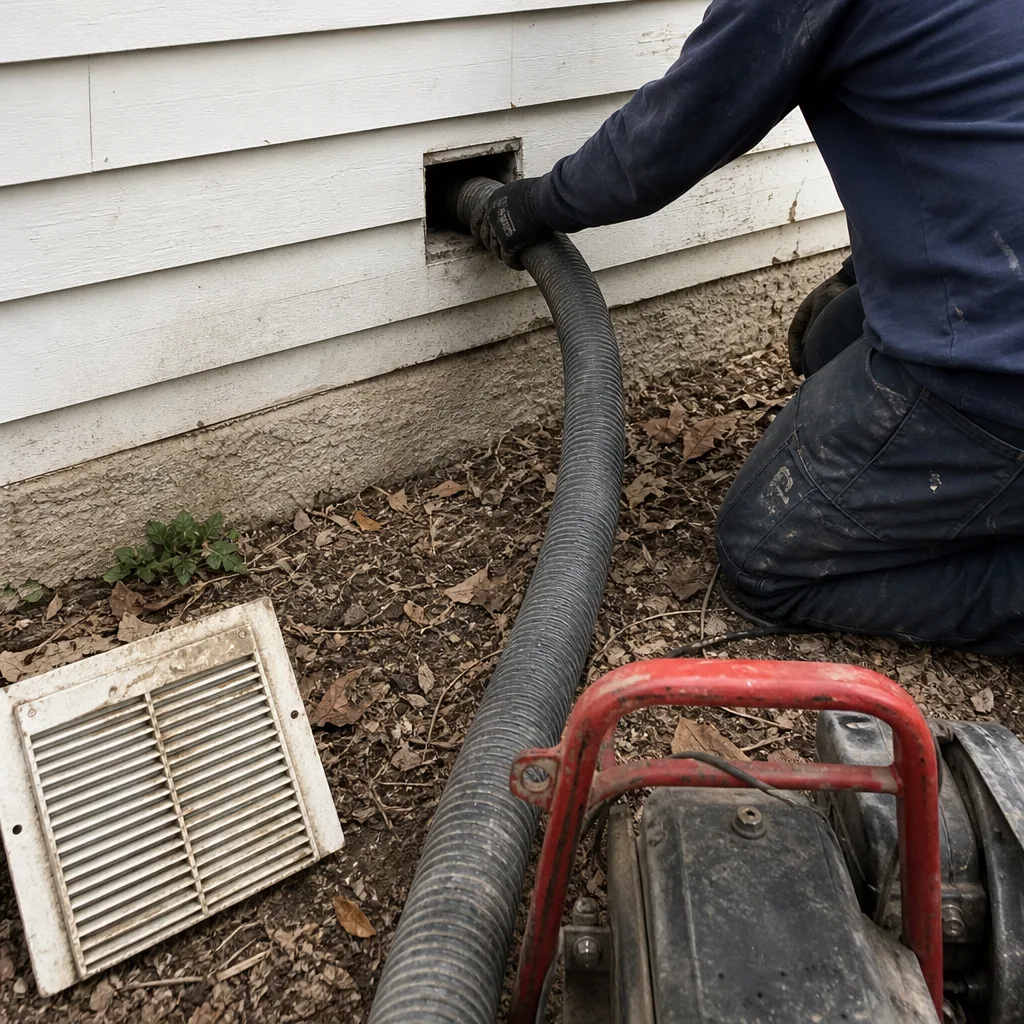 Before
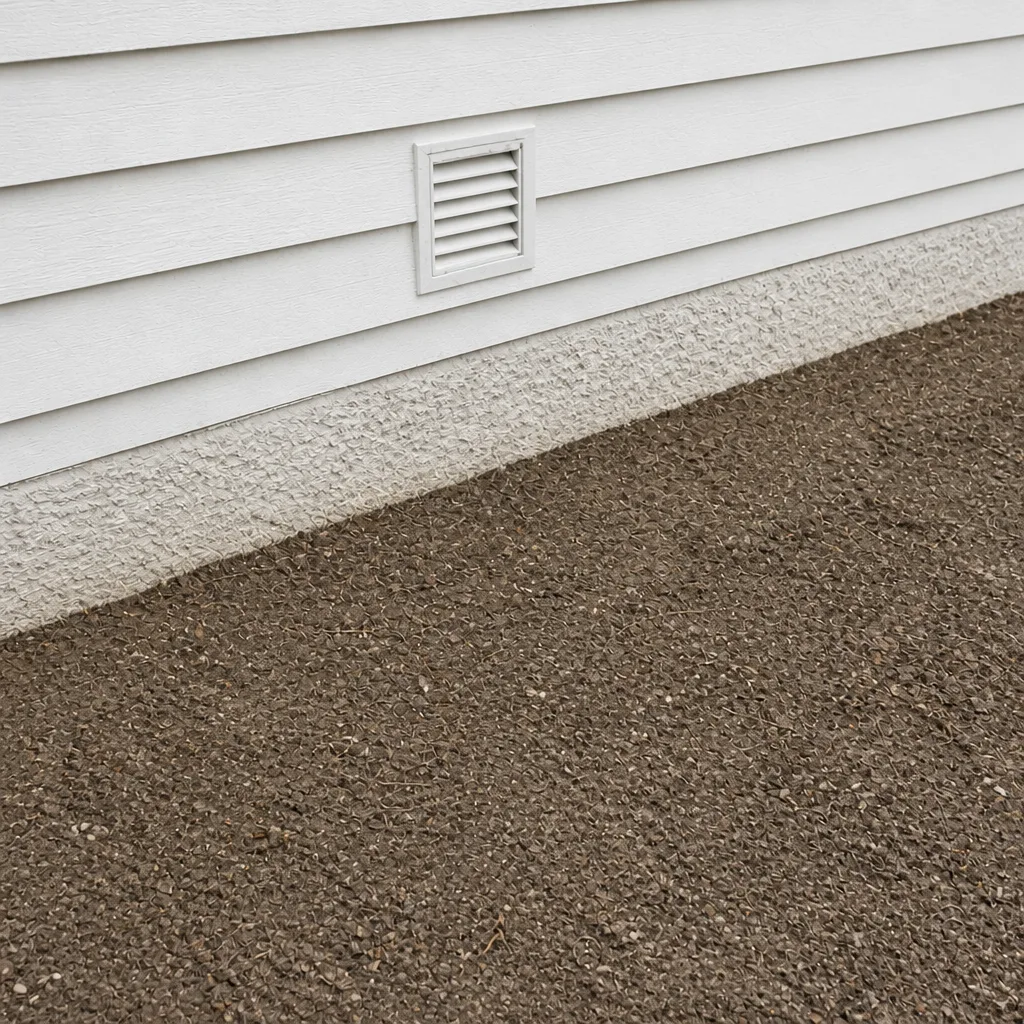 After
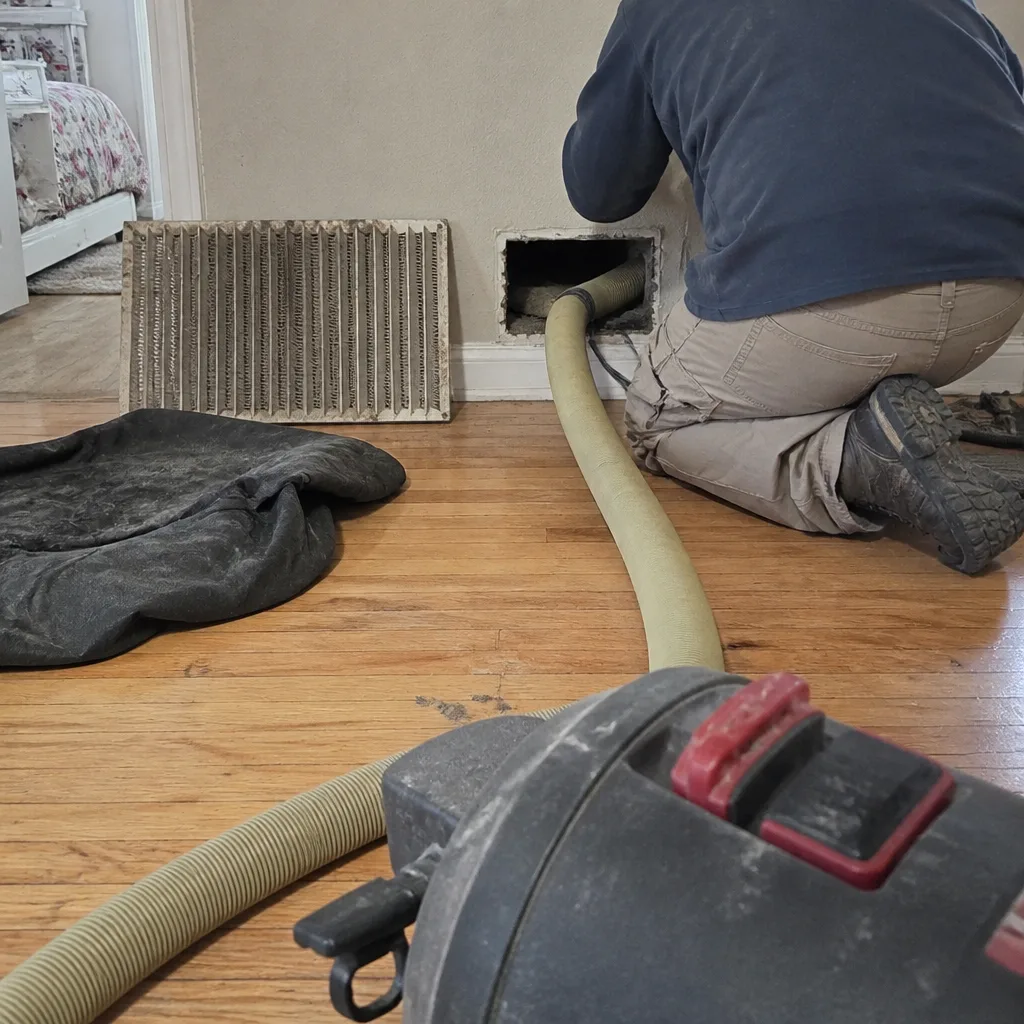 Before
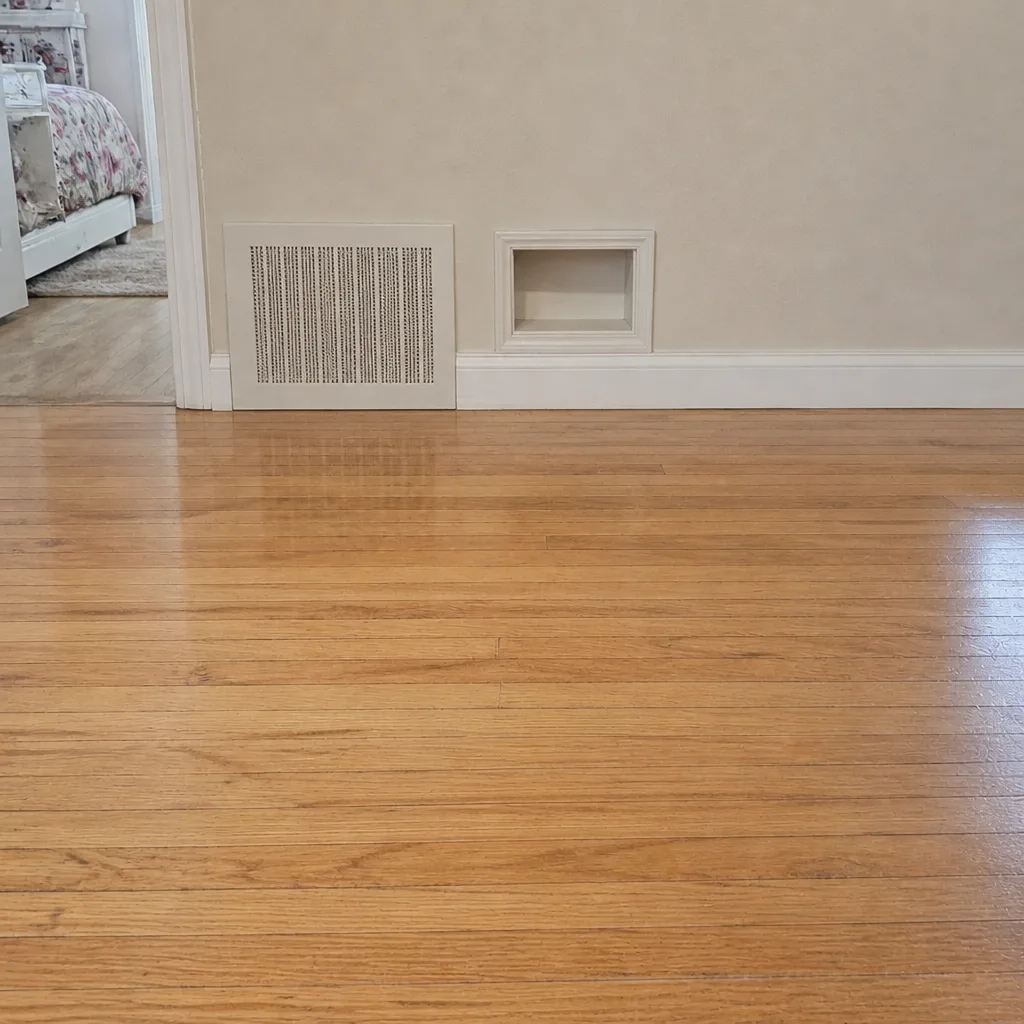 After
 Before
 After
When to Call a Professional
You should call a professional when the situation is more than a dust problem you can live with. That means visible dust at the registers when the system kicks on, a return grille that’s clearly loaded, a recent renovation that generated drywall dust, a new-home purchase with no cleaning history, or pest activity in the attic or crawlspace. It also means any concern about a dryer vent you haven’t had cleaned in years – lint in a vent line is a fire risk, and it’s a separate job from duct cleaning. What it doesn’t mean is a seasonal reflex. If nothing has changed in the home and the filter is being changed on schedule, an honest inspection will tell you there’s nothing to do yet.
Routine duct cleaning is a scheduled service, not an emergency – so there’s no urgency to the same-day call, and no reason to accept a high-pressure visit from a door-to-door crew. Get the written estimate, ask the seven questions above, and take your time deciding. Nampa Duct Cleaning offers free estimates in Nampa – call (833) 842-1697. We answer 24/7. Fast dispatch from 7am to 7pm, Sunday through Friday.
Frequently Asked Questions
Full-system air duct cleaning in Nampa typically runs $400 to $700 for a standard single-zone home, and $700 to $1,000-plus for larger or dual-zone systems and homes with difficult duct access. A legitimate full-system clean includes supply ducts, return ducts, plenum, air handler exterior, and grilles as part of one flat price. Per-vent coupon prices under $200 are entry prices, not full-system prices. Call (833) 842-1697 for an exact quote – estimates are free.
Cheap quotes are cheap because they’re per-vent entry prices, not full-system prices, and the equipment they use typically isn’t professional HEPA-rated extraction and rotary-brush contact cleaning. A company running consumer-grade vacuums and charging per register has lower overhead, which is exactly why the initial number looks low. Once you count your registers and add the add-ons, the total often runs above a legitimate flat-rate quote. Call (833) 842-1697 for a flat-rate estimate you can compare – estimates are free.
Before-and-after photos of your own ducts, taken during the job, are the only reliable evidence. Ask for the photos before you sign the invoice, and look at the actual ductwork – not just the register grilles. A contractor confident in the work will show you the evidence; a contractor without it will tell you the ducts were “very dirty.” Call (833) 842-1697 for a quote that comes with documented before-and-after photos – estimates are free.
There’s no fixed “every N years” rule. Cleaning is event-driven: after a renovation, after a move-in to a home with unknown history, after pest activity, or when visible dust increases at the registers. If the home was cleaned recently and the filter is being changed on schedule, a cleaning usually isn’t warranted. Ask for a specific finding before you book. Call (833) 842-1697 for an inspection-based quote – estimates are free.
Yes, if you haven’t had it done in several years. Dryer vent cleaning is a distinct service from HVAC duct cleaning, and lint accumulation in the vent line is a fire hazard that has nothing to do with your indoor air quality. Cleaning both in the same visit saves a second callout. Call (833) 842-1697 to schedule dryer vent cleaning alongside your duct cleaning – estimates are free.
Repair pricing depends on what’s found. Register boot sealing and joint resealing are modest line items; flex duct section replacement is more expensive because access and labor drive the price; full run replacement is the largest repair. The written estimate for repair is set per job based on what’s actually seen, and can typically be done in the same visit as the cleaning. Call (833) 842-1697 for a quote that includes duct repair – estimates are free.
The Bottom Line
Duct cleaning pricing in Nampa is not one number – it’s a range that reflects equipment tier, time on site, and the actual scope of the job. A $400 to $700 quote for a standard single-zone home is a legitimate full-system clean. A $99 per-vent coupon is an entry price. The gap between the two is not a discount – it’s a different product. Before you book, ask for the flat-rate price in writing, confirm what’s in the scope, ask about repair capability if problems are found, and confirm you’ll get before-and-after photos of your own ducts. That’s the entire comparison in three questions. Our technicians have up to 13 years of experience, and we use professional-grade equipment from Rotobrush, Nikro, and Abatement Technologies on every job. To schedule a free estimate in Nampa, call (833) 842-1697. We answer 24/7. Fast dispatch from 7am to 7pm, Sunday through Friday. For more on how we work, see Nampa Duct Cleaning.
Written by the team at Nampa Duct Cleaning.